A lot of Gilmore Girls begins with a comforting idea.
Lorelai and Rory are not just mother and daughter.
They are a team.
They talk.
They joke.
They share food, television, opinions, and a kind of emotional shorthand that makes their relationship look almost effortless.
But the older Rory gets, the harder that version of motherhood becomes to maintain.
Because Lorelai can protect Rory from plenty of things.
She can protect her from loneliness.
She can help her through heartbreak.
She can sit beside her when she is sick.
She can make difficult moments feel less frightening by turning them into jokes.
What she cannot do is protect Rory from becoming an adult who makes choices Lorelai would never make herself.
And that may be the most painful evolution in their entire relationship.
In the beginning, Lorelai could still make problems feel manageable
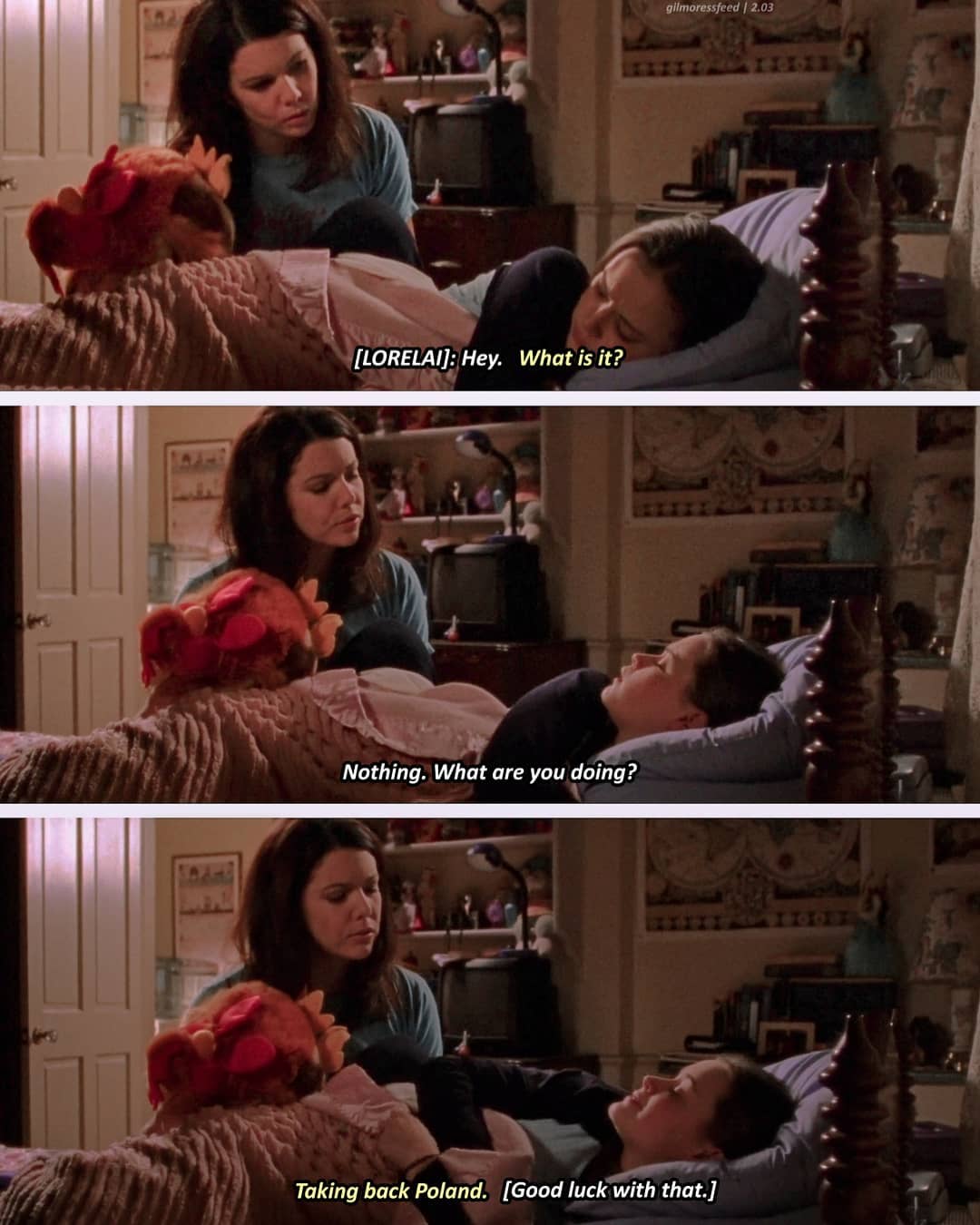
There is something wonderfully intimate about scenes where Rory is still young enough to lie in bed while Lorelai hovers nearby.
The dynamic feels almost effortless.
Rory is uncomfortable.
Lorelai arrives.
A strange joke appears.
Whatever the problem is, they can temporarily shrink it down until it fits inside the room.
That is one of Lorelai’s real talents as a mother.
She can convert anxiety into something survivable.
Sometimes she does it through practical help.
More often, she does it through humor.
It is her way of telling Rory:
You are not alone in this.
Their humor created emotional safety
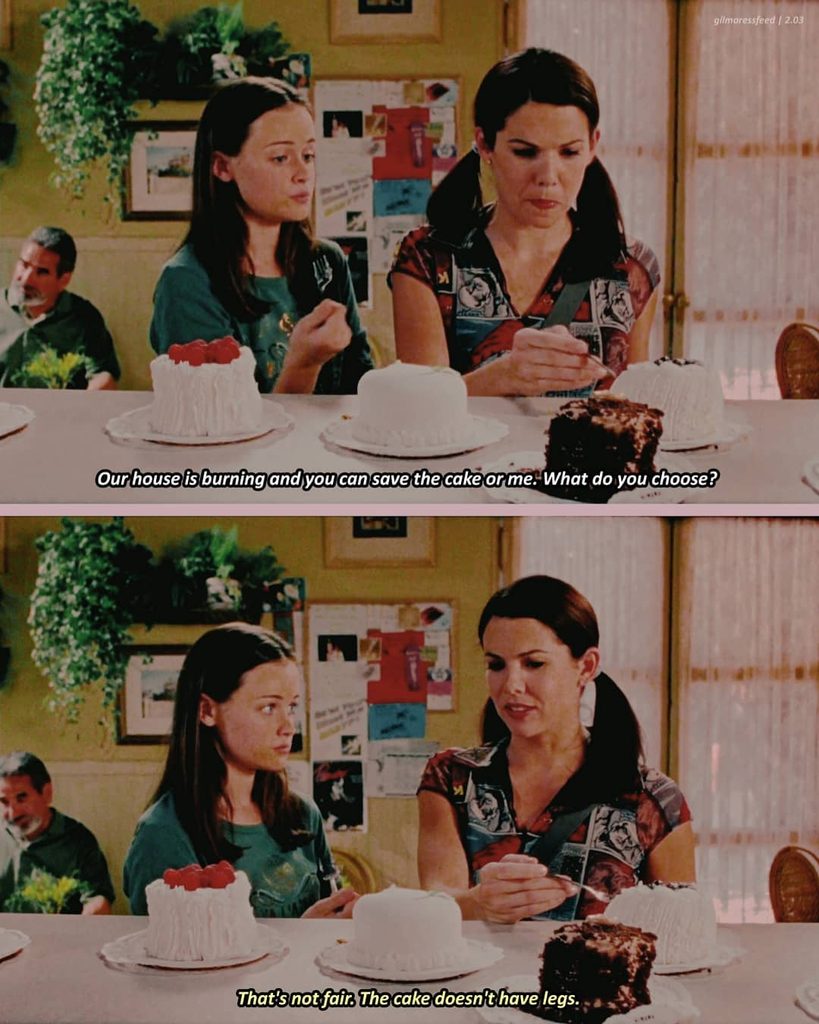
The cake conversation perfectly captures the emotional structure of their relationship.
A hypothetical crisis appears.
Rory asks Lorelai to choose between her and cake.
Lorelai refuses to cooperate with the seriousness of the question.
That sounds silly, but it reveals something important.
Humor is one of the ways this family proves intimacy.
Rory can ask absurd questions because she knows Lorelai will play along.
Lorelai can joke because she trusts Rory to understand that the joke exists on top of love, not instead of it.
The problem is that this style works best when the stakes are manageable.
As Rory grows older, the consequences stop being hypothetical.
Eventually, Rory starts making choices Lorelai cannot fix
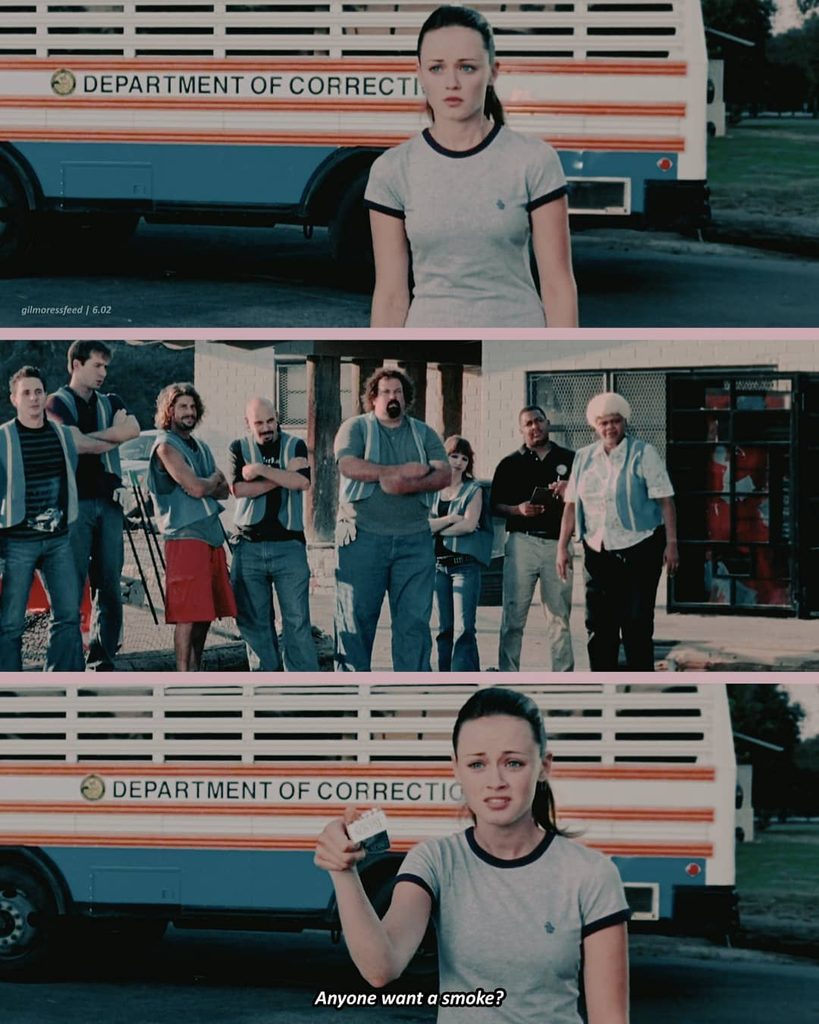
Seeing Rory outside a correctional setting is one of the strongest visual reminders of how far her storyline eventually travels from the version of Rory introduced at the beginning of the show.
This is the girl everyone expected to succeed.
The responsible one.
The reader.
The academic star.
The child around whom adults built narratives of extraordinary potential.
And then she makes a serious mistake.
That is difficult for Rory.
But it is also difficult for Lorelai.
Because parents often build identities around what they believe their children are capable of becoming.
When the child suddenly steps outside that imagined future, the parent does not only worry.
The parent also has to revise the story they have been telling themselves.
Lorelai always wanted Rory to be independent.
But genuine independence includes the possibility that Rory will make choices Lorelai hates.
That is where motherhood becomes harder than friendship.
The friendship model finally reaches its limit
The “best friends first” dynamic between Lorelai and Rory is one of the most beloved parts of Gilmore Girls.
It is also one of the relationship’s biggest complications.
Friends advise.
Parents sometimes have to draw lines.
Friends can disagree and walk away for the evening.
Parents often carry responsibility for consequences even when the child insists they are old enough to decide.
That tension becomes impossible to avoid as Rory grows.
Lorelai cannot always be both the fun person who understands and the mother who says, “This is not okay.”
Sometimes those two roles collide.
And when they do, their closeness makes the conflict more painful rather than less.
Rory’s adulthood forces Lorelai to surrender control
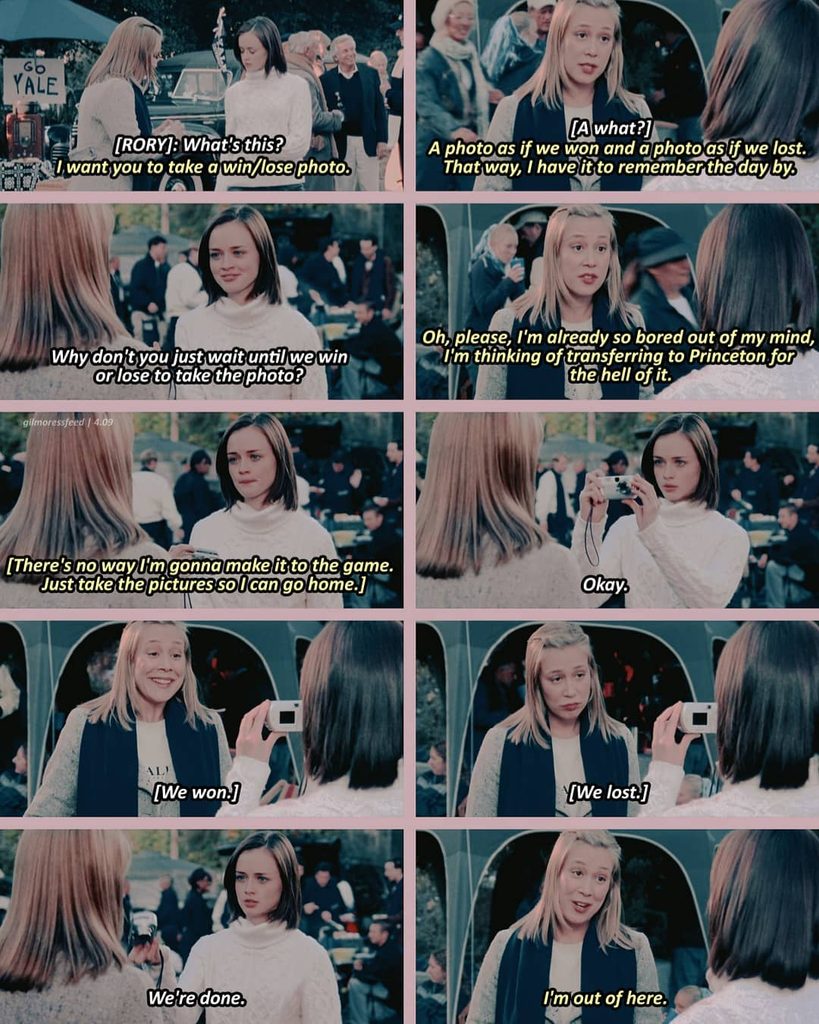
Scenes at Yale are full of small signals that Rory’s life is increasingly outside Lorelai’s immediate orbit.
New friends.
New rituals.
New ambitions.
New versions of competition and disappointment.
Lorelai can still support her.
But she cannot be present for every decision.
That is one of the hidden emotional transitions of the show.
Rory does not simply leave home physically.
She gradually becomes a person Lorelai cannot completely interpret.
And that is normal.
Painful, but normal.
Parenthood eventually becomes an exercise in loving someone whose decisions are no longer yours to shape.
The real achievement of their relationship was not avoiding conflict
The best part of Lorelai and Rory’s bond is not that they were unusually close.
It is that the relationship had to survive losing the version of closeness they started with.
The early relationship depends on Rory needing Lorelai.
The later relationship depends on Lorelai loving Rory even when Rory no longer wants to be guided in the same way.
That is a profound change.
And it is one of the reasons their relationship feels more emotionally serious on a rewatch.
Lorelai can soothe a sick teenager.
She can joke about cake.
She can fix countless small disasters.
But she cannot live Rory’s life for her.
Eventually love has to become something less controlling and more difficult:
being there without being in charge.
That is a harder kind of motherhood.
And maybe a more honest one.
Do you think Lorelai struggled more with Rory’s mistakes because she was her mother—or because they had always been so close as friends?