When many viewers first meet Rory Gilmore, they are given a very specific promise.
She is smart.
Responsible.
Bookish.
Ambitious.
Polite.
The girl who reads when everyone else is talking.
The teenager adults trust.
The student teachers notice.
And because television has trained audiences to recognize this kind of character, it is easy to assume we know what the story will be.
Rory will work hard.
She will succeed.
She will make the right decisions.
And when something goes wrong, she will learn a lesson and move neatly forward.
But that is not really the story Gilmore Girls tells.
Rory’s story becomes far more interesting—and far less frustrating—when you stop expecting her to prove that she was exceptional all along.
Being “the responsible one” becomes an identity

College changes Rory in ways that are easy to underestimate.
She is suddenly surrounded by people who were also the smartest person in their hometown.
People with ambition.
People with confidence.
People with their own expectations.
And for the first time, Rory’s identity as the person who always has things under control begins to feel less natural.
The scene with Paris pushing her toward more life, more activity, more experience works because Rory’s hesitation feels familiar.
She is tired.
Unsure.
Still learning the difference between independence and exhaustion.
That is adulthood arriving quietly.
Paris is a useful contrast because she never pretends pressure doesn’t exist

Paris often looks absurdly intense.
She prepares for victory and defeat at the same time.
She anticipates disappointment before anything has even happened.
She attacks uncertainty by planning for every possible outcome.
Rory’s instinct is different.
Rory often wants to believe that sincere effort will eventually produce the right result.
Paris assumes life is hostile and prepares accordingly.
Neither worldview is completely healthy.
But on a rewatch, Paris often looks less ridiculous than she did the first time.
She understands that high achievement does not eliminate anxiety.
Sometimes it creates more of it.
Rory’s biggest mistakes become more understandable when perfection stops being the standard

The community-service storyline is one of the moments where viewers are invited to confront a Rory who no longer resembles the simple image of the “good kid.”
And that is precisely why it matters.
For years, Rory has been rewarded for making good decisions.
People praise her.
Trust her.
Predict greatness for her.
So when she finally makes a serious mistake, the collapse is not just practical.
It is existential.
What happens when the person who has always been “the responsible one” behaves irresponsibly?
Who are you when the identity everyone admired no longer fits perfectly?
Those questions are far more interesting than simply deciding whether Rory deserved criticism.
Of course she made mistakes.
The point is that she had to discover she could survive being the person who made them.
Failure is harder for people who built their self-worth around success
A lot of Rory criticism assumes she should have handled setbacks better.
But that ignores how little practice she had with meaningful failure.
People who fail often learn how to fail.
They learn that embarrassment ends.
They learn that rejection does not erase their identity.
They learn that mistakes can coexist with competence.
Rory spends much of her early life being told she is extraordinary.
That sounds like a gift.
Sometimes it is.
It can also become a trap.
Because if being exceptional becomes central to your identity, ordinary disappointment feels like evidence that your entire self-concept was fraudulent.
That is one reason Rory’s later uncertainty feels more believable when you watch the series as an adult.
Even adult Rory still needs to renegotiate who she thinks she is
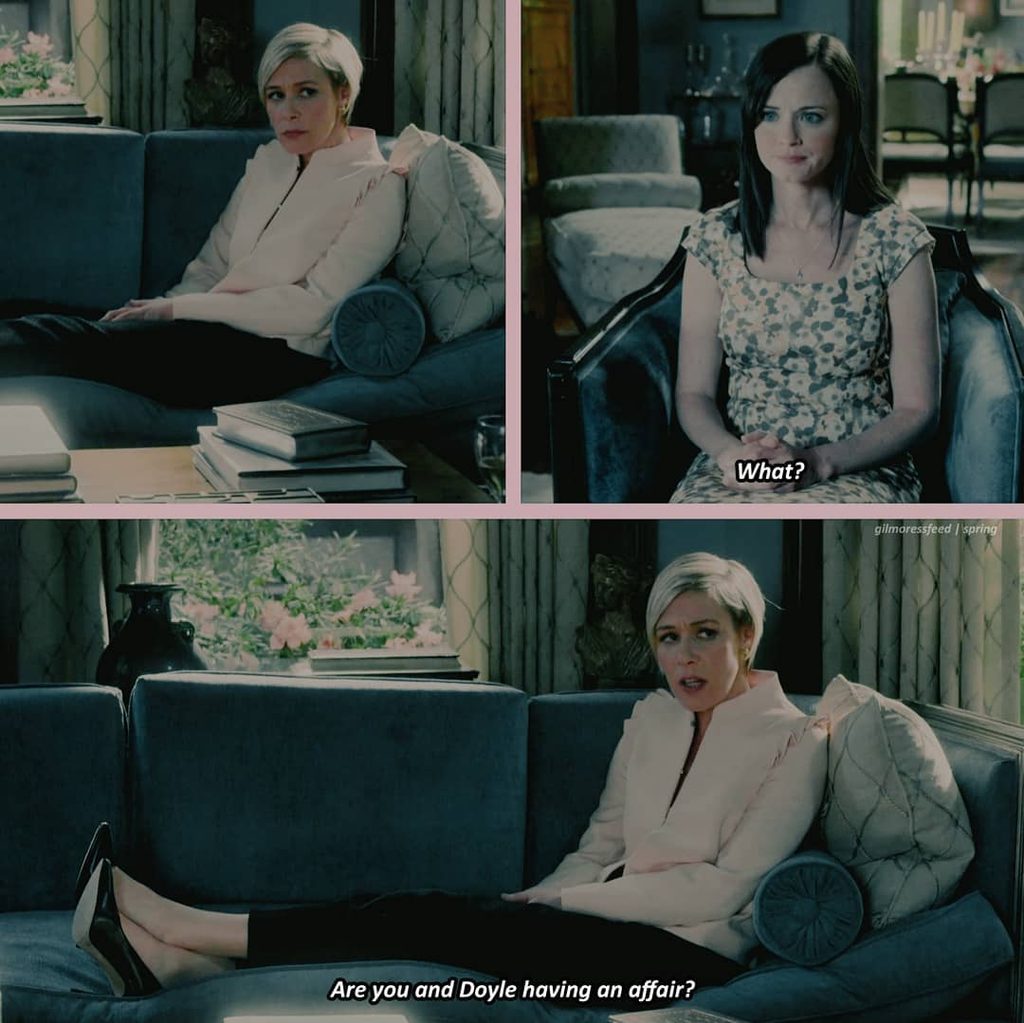
The later Rory we see opposite Paris is not the same person from Chilton.
Neither is Paris.
And that matters.
Their adulthood is not presented as the neat payoff to everything they worked toward.
It is messy.
Relationships change.
Careers move unpredictably.
Old identities stop fitting.
And yet their friendship remains one of the most interesting mirrors in the series because each woman reflects something the other struggles with.
Paris charges forward aggressively.
Rory hesitates, recalibrates, and sometimes drifts.
Neither woman has become a perfect adult.
That might actually be the point.
Rory is more believable when she is allowed to disappoint us
The temptation with a character like Rory is to want her arc to validate the person she was at sixteen.
We want the bookish girl to become the brilliant journalist.
We want the hard-working teenager to receive the future she earned.
We want her choices to make sense because we invested in the promise.
But adulthood does not always honor childhood potential in such a straight line.
People change.
Ambition changes.
Industries change.
Confidence changes.
Sometimes a person with extraordinary promise becomes an ordinary adult who is still trying to figure out what comes next.
There is nothing especially cinematic about that.
But there is something deeply human about it.
Maybe Rory Gilmore’s story was never meant to prove that smart children become perfect adults.
Maybe it was always about discovering that intelligence does not protect you from confusion.
Achievement does not protect you from disappointment.
And making the wrong choice does not mean the person you were before was fake.
Rory becomes easier to understand once we stop asking her to remain the person everyone expected her to become.
That is when she starts to feel less like a broken promise.
And more like an adult.
Did you become more sympathetic to Rory’s mistakes when you rewatched Gilmore Girls as an adult—or less?