- Lorelai Tried Not to Become Emily, but Parenting Rory Was Never That Simple
- The Hardest Gilmore Girls Truth: Loving Your Child Doesn’t Mean You’ll Always Understand Her
Lorelai built much of her identity around one promise:
She would not raise Rory the way she felt Emily had raised her.
Less control.
More conversation.
More trust.
More humor.
More freedom.
From the outside, that decision seems successful. Lorelai and Rory are famously close. They talk like friends. They share jokes, routines, food, secrets and an emotional shorthand that makes their relationship feel almost effortless.
But one of the most intelligent things Gilmore Girls eventually reveals is that avoiding your parents’ mistakes does not automatically prevent you from creating new ones.
Lorelai does not become Emily.
But she still has expectations.
And Rory still has to grow beyond them.
Lorelai begins parenting from the idea of choice
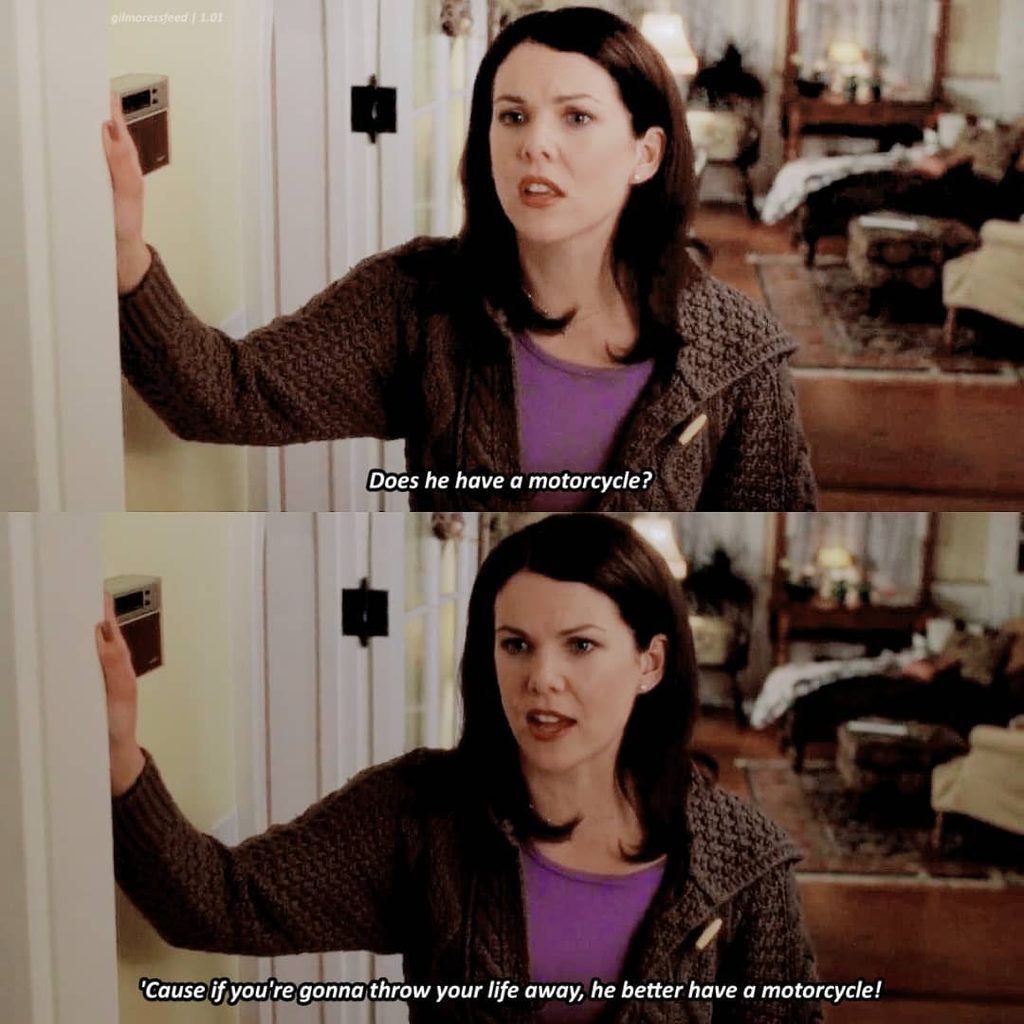
The motorcycle joke captures early Lorelai parenting perfectly.
She is worried.
She is suspicious.
She is trying to understand a teenage situation she cannot completely control.
But rather than immediately becoming authoritarian, she makes it funny.
Humor becomes a tool for keeping communication open.
That is the opposite of what Lorelai remembers from her own childhood.
Emily often approaches danger by tightening control.
Lorelai approaches it by trying to remain close enough that Rory will tell her what is happening.
That strategy works beautifully—until Rory begins making choices Lorelai genuinely dislikes.
Friendship makes motherhood easier until disagreement becomes serious
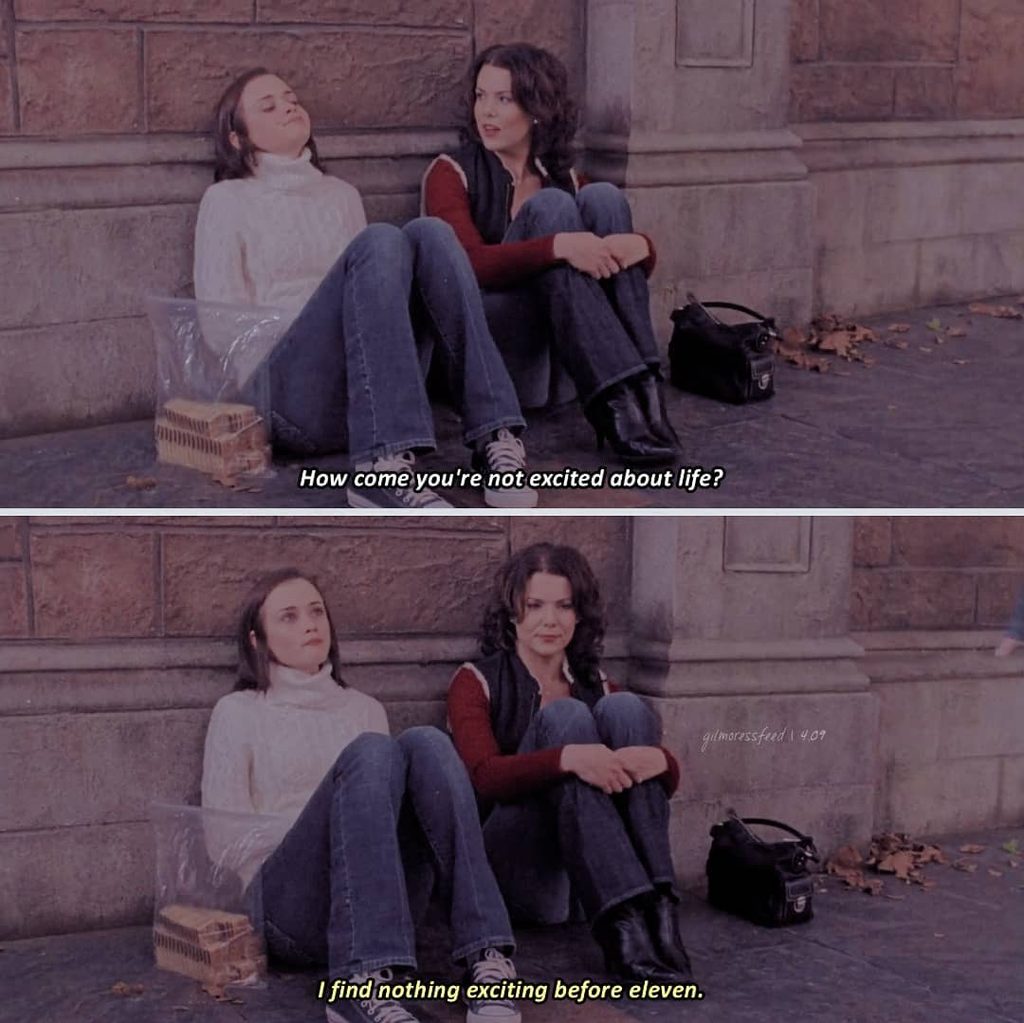
Moments like Rory and Lorelai sitting together, joking about life, explain why viewers fell in love with their relationship.
There is almost no visible hierarchy.
They are simply talking.
That intimacy is wonderful.
But it creates an unusual parenting problem.
If your daughter experiences you primarily as her closest friend, what happens when you suddenly need to become the authority figure?
A traditional parent-child relationship already contains that hierarchy.
Lorelai and Rory often pretend theirs does not.
So when major disagreements arrive, the emotional shock becomes more severe.
Rory is not merely disagreeing with her mother.
She can feel as though her best friend has withdrawn approval.
And Lorelai is not merely disciplining her daughter.
She can feel personally rejected by someone whose emotional life has been intertwined with hers for years.
Friday night dinner represents the family system Lorelai thought she escaped

The early conversation about dinner with the grandparents is played for comedy.
Rory’s reaction to the calendar is funny.
But structurally, this small scene changes the entire family.
Friday night dinner brings Rory into the world Lorelai left.
That produces one of the central tensions of the series.
Lorelai wants Rory to have access to opportunities.
But access also means exposure.
Rory begins to know Emily and Richard as people rather than simply as the parents Lorelai fled.
She sees their generosity.
Their affection.
Their wealth.
Their traditions.
Their expectations.
And eventually, Rory discovers that she is capable of enjoying parts of that world.
That possibility is emotionally difficult for Lorelai because Rory’s attraction to the Gilmore world can feel, unfairly but understandably, like a challenge to Lorelai’s own life choices.
Rory grows into a person Lorelai cannot completely design

Rory’s adult life expands dramatically.
Yale gives her new friends, new pressures, new romantic possibilities and new ways of seeing herself.
Paris is part of that evolution too.
Rory’s life stops revolving around Stars Hollow.
This is exactly what Lorelai always said she wanted.
And yet there is a painful paradox in parenting:
Successful independence means your child eventually becomes independent from you.
Lorelai gives Rory freedom because she wants her to think for herself.
Then Rory thinks for herself.
Sometimes Lorelai does not like the result.
That does not make Lorelai a hypocrite.
It makes the relationship human.
Emily and Lorelai share more than Lorelai wants to admit
The most interesting generational pattern in Gilmore Girls is not that Lorelai becomes Emily.
She does not.
The interesting pattern is that both women struggle when love fails to produce the choices they hoped for.
Emily loves Lorelai and cannot understand why Lorelai rejects the life she believes will protect her.
Lorelai loves Rory and sometimes cannot understand why Rory chooses things Lorelai believes will hurt her.
The methods are different.
The emotional impulse is surprisingly similar.
Both women occasionally confuse:
“I know you”
with
“Therefore I know what you should do.”
That is one of the deepest family themes in the series.
Growing up means Rory eventually hears Lorelai differently

By the later seasons, Rory no longer depends on her mother in the same way.
She has relationships Lorelai cannot supervise.
She travels emotionally and geographically farther from home.
Sometimes even a phone connection becomes a reminder that Rory’s life now exists somewhere Lorelai cannot fully access.
For Lorelai, that distance is both victory and loss.
She raised Rory to go.
She also has to survive Rory going.
That is the contradiction at the heart of their relationship.
And perhaps at the heart of parenting itself.
The goal is to raise someone capable of leaving you.
No wonder it hurts.
Do you think Lorelai truly broke the Gilmore family cycle—or did she simply create a gentler version of the same problem?