- Rory Wasn’t Failing—She Was Discovering That Being “The Good Kid” Has a Cost
- The Older You Get, the More Rory’s Confusion Makes Sense
When many viewers first meet Rory Gilmore, she seems like the person most likely to succeed.
She loves reading.
She takes school seriously.
She is polite.
Adults trust her.
Teachers recognize her potential.
Her mother believes in her almost completely.
The show builds Rory as the kind of teenager who appears to have a map.
Then adulthood arrives.
And the map stops working.
On a first watch, that can feel frustrating.
On a later rewatch, it can feel painfully familiar.
Because Rory’s story is not really about a perfect girl suddenly becoming disappointing.
It is about what happens when a child who built her identity around being “good” enters a world where effort no longer guarantees certainty.
Being exceptional becomes part of Rory’s identity too early
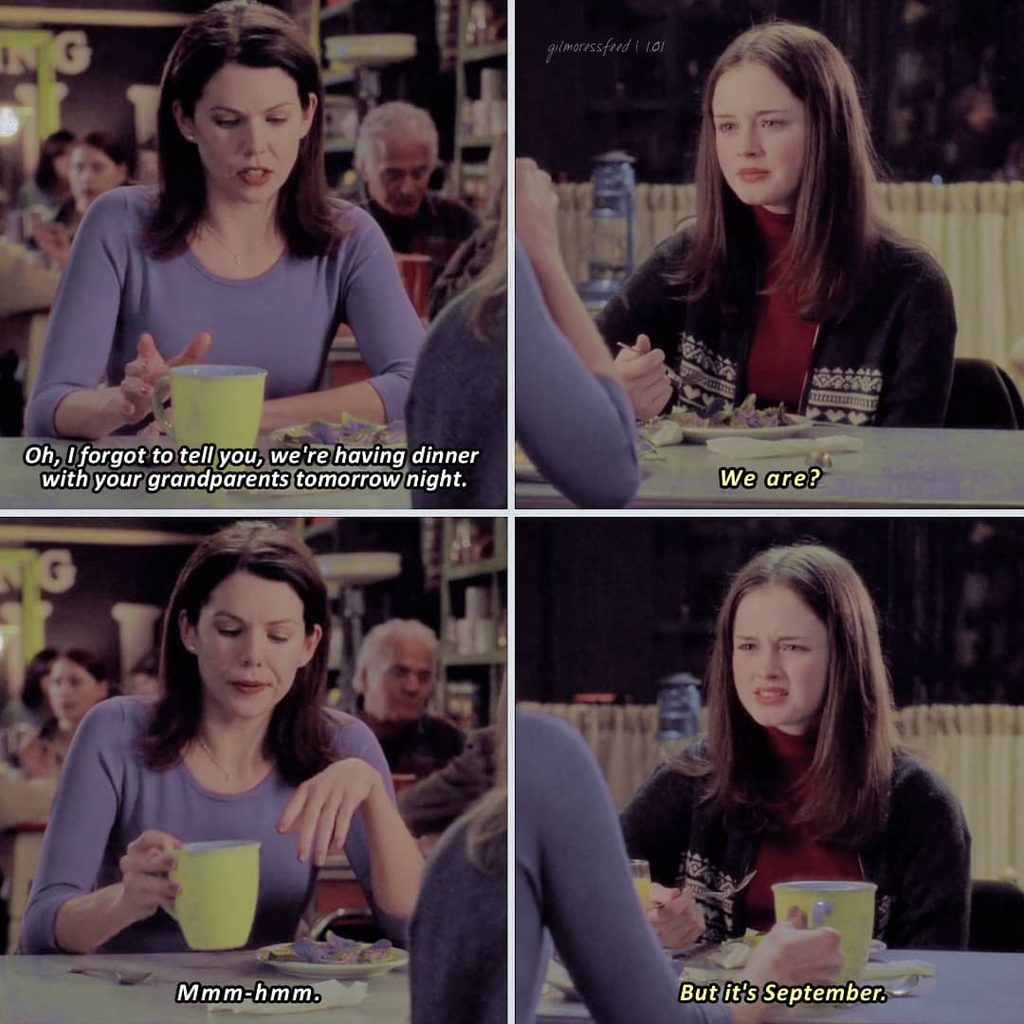
From the beginning, Rory is treated as special.
Her education matters enormously.
Chilton matters.
Harvard matters.
Later Yale matters.
The adults around Rory speak about her future with confidence.
That confidence sounds supportive—and it is.
But there is another side to constantly being told that you are going somewhere extraordinary.
You begin to believe that uncertainty itself is failure.
Rory does not simply want a career.
She has spent years absorbing the idea that success is evidence of who she is.
That creates enormous pressure once life becomes unpredictable.
College gives Rory freedom without giving her a script
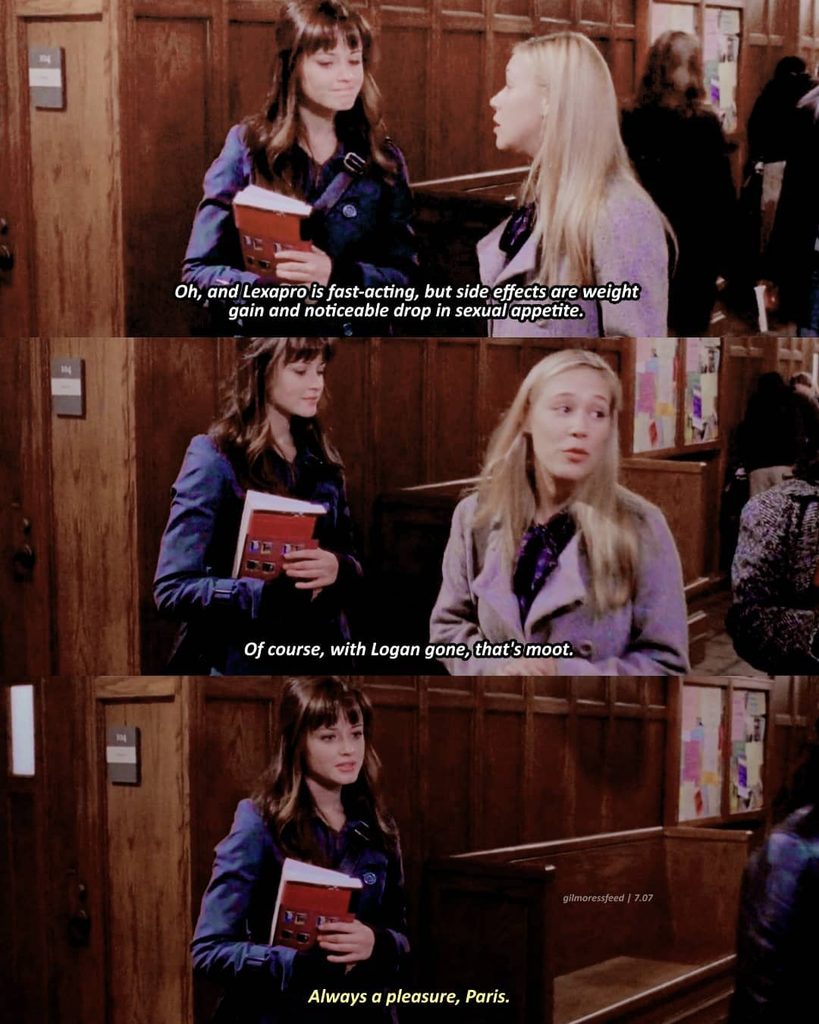
Rory’s friendship with Paris becomes especially interesting in adulthood.
Paris is brutally anxious, wildly ambitious and often socially overwhelming.
But Paris also understands competition in a way Rory initially does not.
Paris expects the world to be difficult.
Rory expects preparation to matter.
Both assumptions contain truth.
Both eventually fail them in different ways.
On a rewatch, Paris’s intensity can become strangely understandable. She may be exhausting, but she rarely assumes success will arrive politely.
Rory is more shocked when life refuses to validate her.
That difference matters.
Romantic adulthood complicates the identity Rory built at home

The later long-distance phone call is light and funny, but it also shows how far Rory’s life has moved from the world of the early seasons.
Relationships now involve geography.
Career decisions.
Timing.
Adulthood.
Her life can no longer fit neatly inside Stars Hollow, Chilton or even Yale.
That creates a problem television coming-of-age stories often avoid:
Growing up means your life becomes fragmented.
Home is one place.
Work is another.
Love may be somewhere else entirely.
The older you get, the more realistic that feels.
Rory’s exhaustion eventually becomes visible

The conversation about not being excited before eleven is classic Rory/Lorelai humor.
But it also captures something recognizable about growing up.
Ambition is romantic when viewed from a distance.
In practice, ambition often looks like being tired.
Trying to meet deadlines.
Trying to maintain relationships.
Trying to become the person you said you wanted to be.
Rory’s life eventually becomes full of those competing demands.
That is why some of her later choices can feel more understandable when you watch the series after experiencing your own periods of uncertainty.
You may still disagree with her.
But confusion no longer looks like a character flaw.
Sometimes it simply looks like adulthood.
Even love stops providing certainty
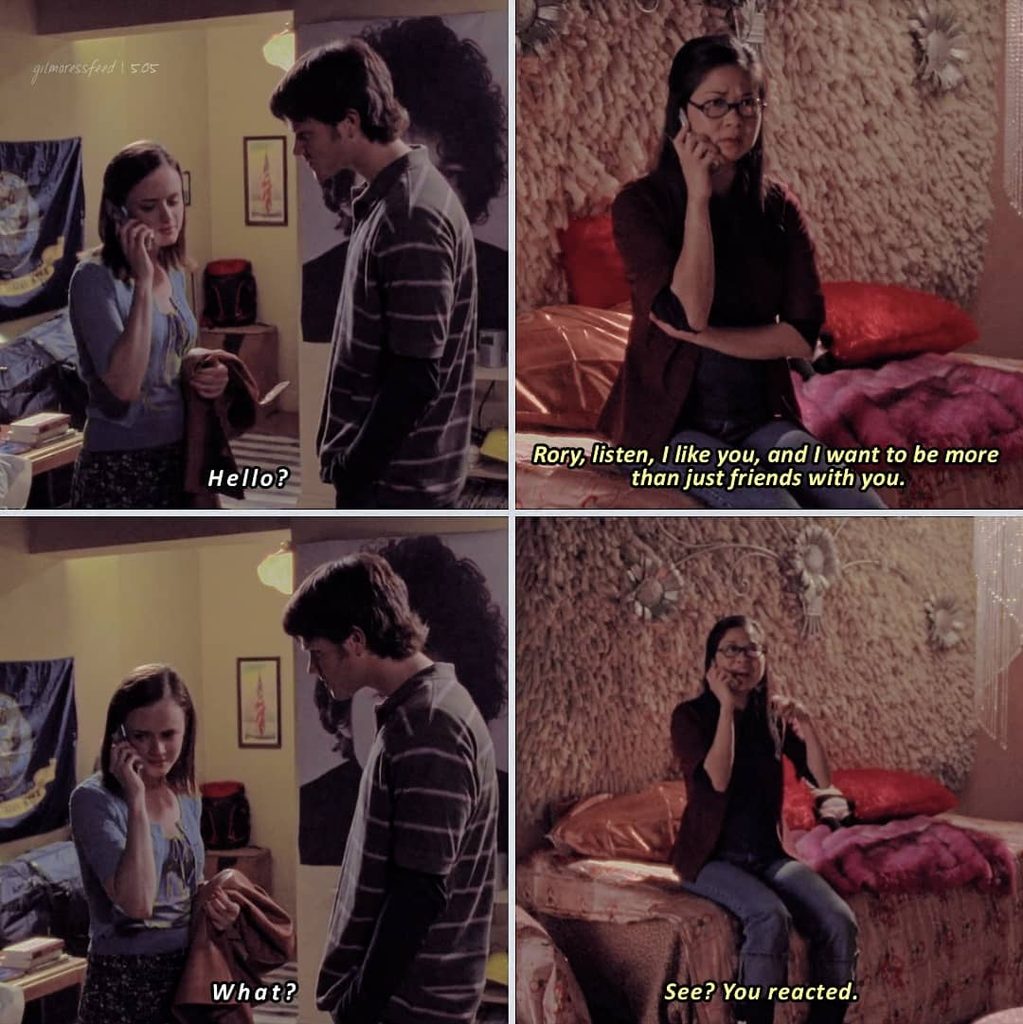
Rory’s romantic life repeatedly puts her in situations where people want clarity from her before she has clarity herself.
That is another adult problem disguised as television drama.
Someone can care about you and still need an answer you are not ready to give.
You can care about someone and still not know whether that relationship belongs in the life you are building.
As a younger viewer, indecision can look irritating.
As an adult, it can look painfully honest.
Rory’s strongest moments are not always moments of confidence
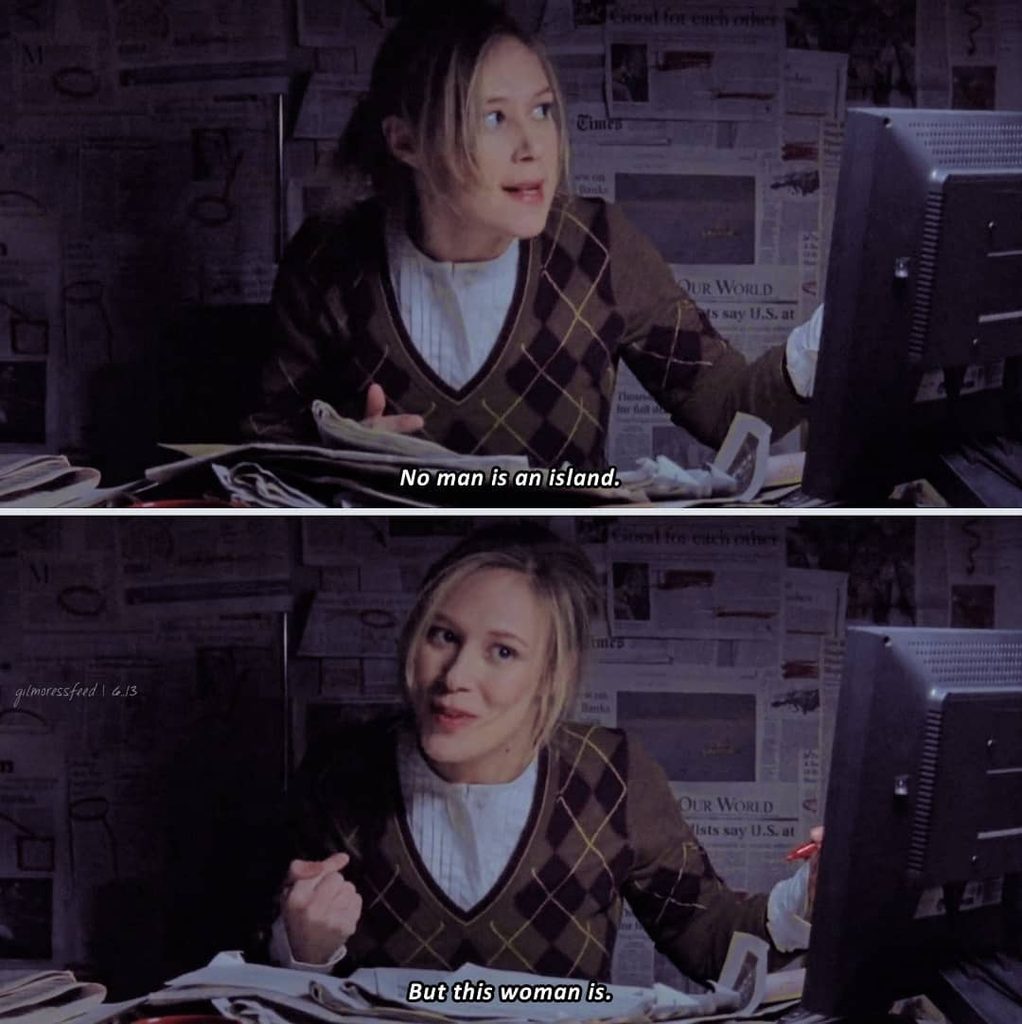
Paris declaring herself effectively an island may be comic, but it reveals something important about adulthood in the series.
Everyone develops a strategy.
Paris uses self-reliance.
Lorelai uses humor.
Rory often uses achievement.
Luke uses routine.
Emily uses control.
None of these strategies works forever.
Growing up means discovering that the coping mechanism that carried you through one stage of life may fail in the next.
Rory’s arc becomes far more interesting once you stop asking:
“Why isn’t she still the girl from Season 1?”
and start asking:
“Why would anyone remain exactly the same person after everything she experiences?”
That shift transforms her story.
Rory does not become less interesting because adulthood complicates her.
She becomes more recognizable.
The child who always knew what the next step was grows into an adult who discovers that sometimes there is no obvious next step.
And that may be one of the most realistic things Gilmore Girls ever did.