- The Quiet Reason Luke Was Different From Everyone Else Lorelai Loved
- Luke Didn’t Need to Fix Lorelai—He Just Wanted to See Her Happy
Lorelai Gilmore has never been an easy person to love in the conventional sense.
She is independent almost to the point of reflex. She uses humor when conversations get too serious. She wants closeness but becomes nervous when closeness starts feeling like control. She has spent most of her adult life proving that she can build a family, a career, and a home on her own terms.
That is why one of Luke’s simplest sentiments ends up revealing so much about why their relationship mattered.
He does not tell Lorelai what happiness should look like.
He does not tell her what decision to make.
He does not demand that she become easier to understand.
He simply wants to see her happy.
And after everything that happens between them, that small distinction may explain their relationship better than any grand romantic speech ever could.
Lorelai spent much of her life resisting other people’s plans for her

From the beginning, Lorelai’s parenting style shows how deeply she values personal choice.
When Rory’s romantic life starts becoming real, Lorelai can be worried, sarcastic and dramatically protective. But even her jokes reveal something essential: she understands that Rory has to make choices for herself.
That attitude comes directly from Lorelai’s own history.
She knows what it feels like when other people believe they know what your life should look like.
Her parents had expectations.
Her social world had expectations.
Even romance sometimes arrives carrying a ready-made idea of what Lorelai should become.
So she develops a strong reaction to anything that feels like someone else writing her future.
That makes love difficult.
Because intimacy requires compromise, but Lorelai is extremely sensitive to the moment compromise starts feeling like surrender.
Christopher represented history—but history comes with expectations

Lorelai’s relationship with Christopher is complicated precisely because it is not meaningless.
They share Rory.
They share adolescence.
They share a version of themselves that existed before Stars Hollow, before the Dragonfly, before Lorelai fully became the person viewers know.
That history gives their connection enormous emotional power.
But history can also pull people backward.
The confession pictured here is painful because it comes at a moment when Lorelai is emotionally overwhelmed. It is not simply a romantic choice. It is the collision of grief, anger, loneliness and old familiarity.
Christopher is someone Lorelai can return to because he belongs to an earlier emotional language.
But returning to something familiar is not always the same as moving toward something healthy.
That difference becomes clearer as the series goes on.
Luke’s love was strongest when it stopped being about possession
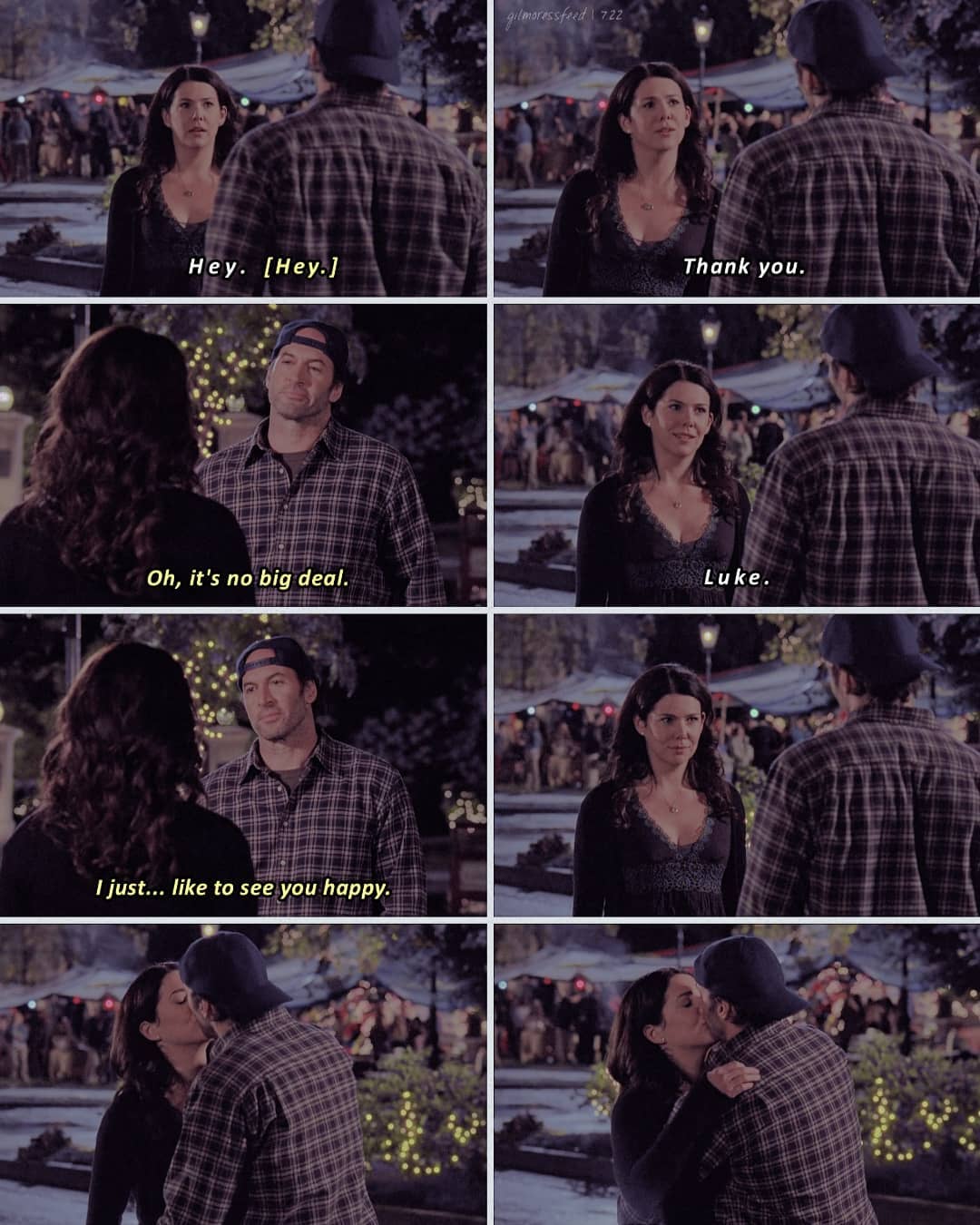
This is what makes the later Luke and Lorelai moment so powerful.
Luke’s line about wanting to see Lorelai happy is not dramatic.
There is no speech about destiny.
There is no demand for recognition.
He does not turn his care into a transaction.
He simply admits that her happiness matters to him.
That may sound small, but for Lorelai it is enormous.
Throughout her life, love has often come tangled with expectation.
Emily loves Lorelai but wants her to participate in a particular idea of family.
Christopher loves Lorelai but is connected to a life they once imagined together.
Even Rory, understandably, sometimes needs Lorelai to remain emotionally stable in order for their unusually close relationship to work.
Luke’s best moments are different.
At his best, he makes room.
He fixes things without asking for applause.
He shows up.
He lets affection live in ordinary actions.
And crucially, he often wants Lorelai to be okay even when that happiness does not immediately benefit him.
That is a more mature kind of love than chemistry alone.
Luke and Lorelai were never romantic because they were perfect
Their relationship is often remembered as inevitable.
But inevitability can make us forget how messy they actually were.
Luke shuts down when overwhelmed.
Lorelai avoids vulnerability by joking.
Both characters can delay difficult conversations until silence becomes more damaging than honesty would have been.
Their problems are real.
That is exactly why the relationship works as television.
It is not compelling because these two people fit together without effort.
It is compelling because underneath all the communication failures, there is a basic emotional instinct toward care.
Luke notices what Lorelai needs.
Lorelai understands Luke’s rhythms.
They can irritate each other because they know each other well enough to hit sensitive spots.
But they can also comfort each other without always needing an explanation.
That kind of familiarity is difficult to fake.
Rory’s relationships help highlight what Lorelai eventually learns
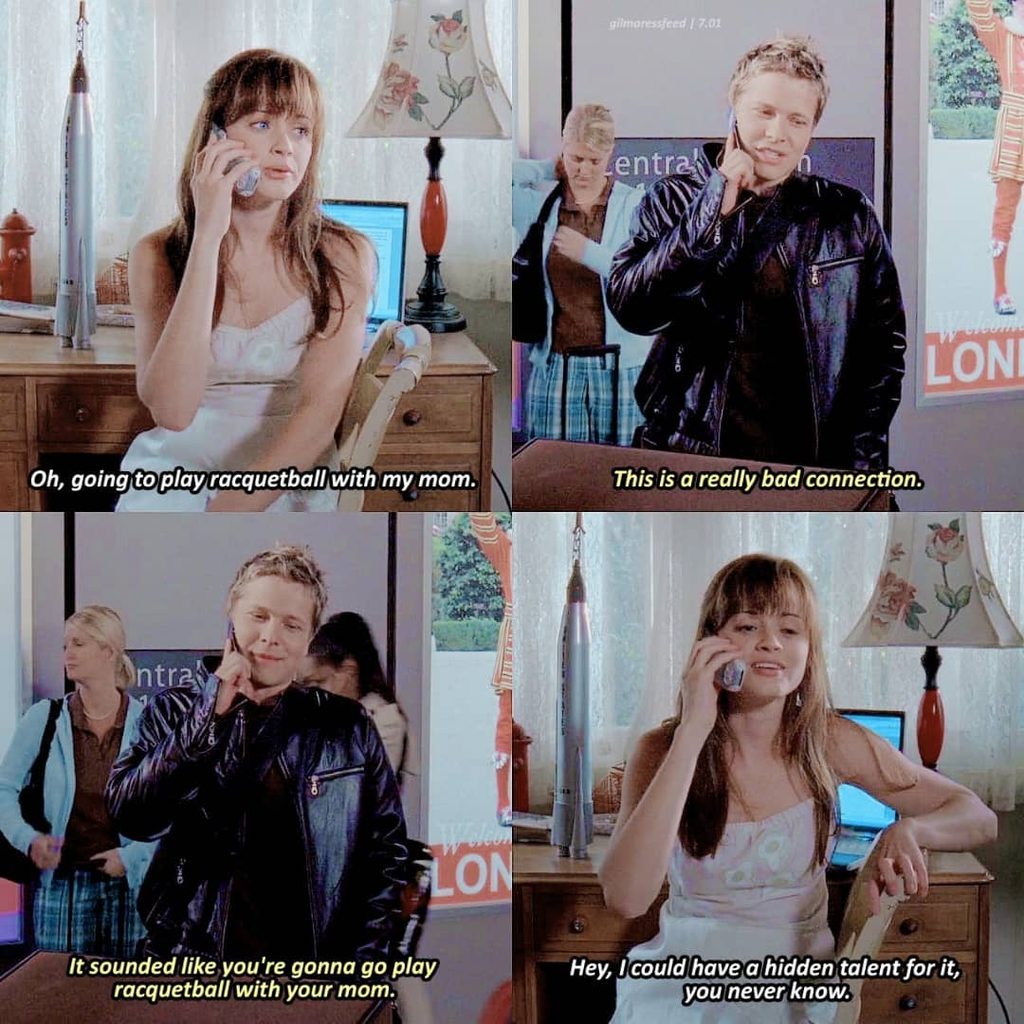
The long-distance phone call in Rory’s life offers a useful contrast.
Rory’s romantic relationships repeatedly force her to discover what connection looks like when routine disappears.
When someone is far away, chemistry cannot rely on physical presence. Communication becomes the relationship.
A bad connection can become a joke, but metaphorically it is also the entire problem.
Can two people still hear each other clearly when life changes?
That question applies to Lorelai just as much as Rory.
The relationships that struggle most in Gilmore Girls are often not those without love.
They are relationships where people stop hearing what the other person is actually trying to say.
Happiness is the most important word in Luke’s final emotional language
That is why Luke’s simple desire to see Lorelai happy carries so much weight.
Young love often asks:
Do you love me?
More mature love eventually asks:
Are you okay?
Those are not the same question.
The first centers the relationship.
The second centers the person.
Luke and Lorelai make countless mistakes, but their best moments move toward that second kind of love.
Not ownership.
Not nostalgia.
Not a fantasy of who the other person should become.
Just the recognition that someone else’s happiness matters.
For a woman who spent her entire life fighting to define happiness for herself, that may have been exactly the kind of love Lorelai needed.