- Why Gilmore Girls Can Feel Cozy Even When Almost Nothing Cozy Is Happening
- The Secret to Gilmore Girls Comfort Wasn’t Stars Hollow—It Was Familiarity
People often describe Gilmore Girls as cozy.
Fall leaves.
Coffee.
Luke’s Diner.
Stars Hollow festivals.
Sweaters.
Gazebo lights.
All of that is true.
But it does not fully explain why millions of viewers can return to the series even when the scenes themselves are not particularly peaceful.
Rory is stressed.
Lorelai is arguing with someone.
Paris is spiraling.
Emily is unhappy.
Luke is grumpy.
And somehow, it still feels comforting.
That is because the deepest form of comfort in Gilmore Girls does not come from scenery.
It comes from familiarity.
Luke’s Diner feels safe because the conversations repeat

One of the simplest early images—Lorelai and Rory sitting across from each other with oversized mugs—contains almost the entire emotional formula of the series.
The same people.
The same place.
The same kind of conversation.
A small problem turned into a joke.
A family obligation absorbed into daily routine.
Nothing visually spectacular needs to happen.
The repetition is the point.
Real homes are built from repetition too.
The chair you always use.
The mug you always reach for.
The person who already knows the story you are about to tell.
That is why Luke’s Diner becomes more than a set.
It becomes ritual.
Comfort does not mean nothing changes

Later seasons take Rory far beyond the physical boundaries of Stars Hollow.
A phone call from another place can remind us how much everyone’s life has changed.
And yet the rhythm of the exchange still feels familiar.
That is one of the series’ cleverest achievements.
Characters grow.
Relationships move.
Jobs change.
People leave.
But their conversational habits remain recognizable.
The show gives viewers the emotional experience of returning to people they know.
That is far more powerful than simple nostalgia.
Lorelai’s humor turns inconvenience into belonging
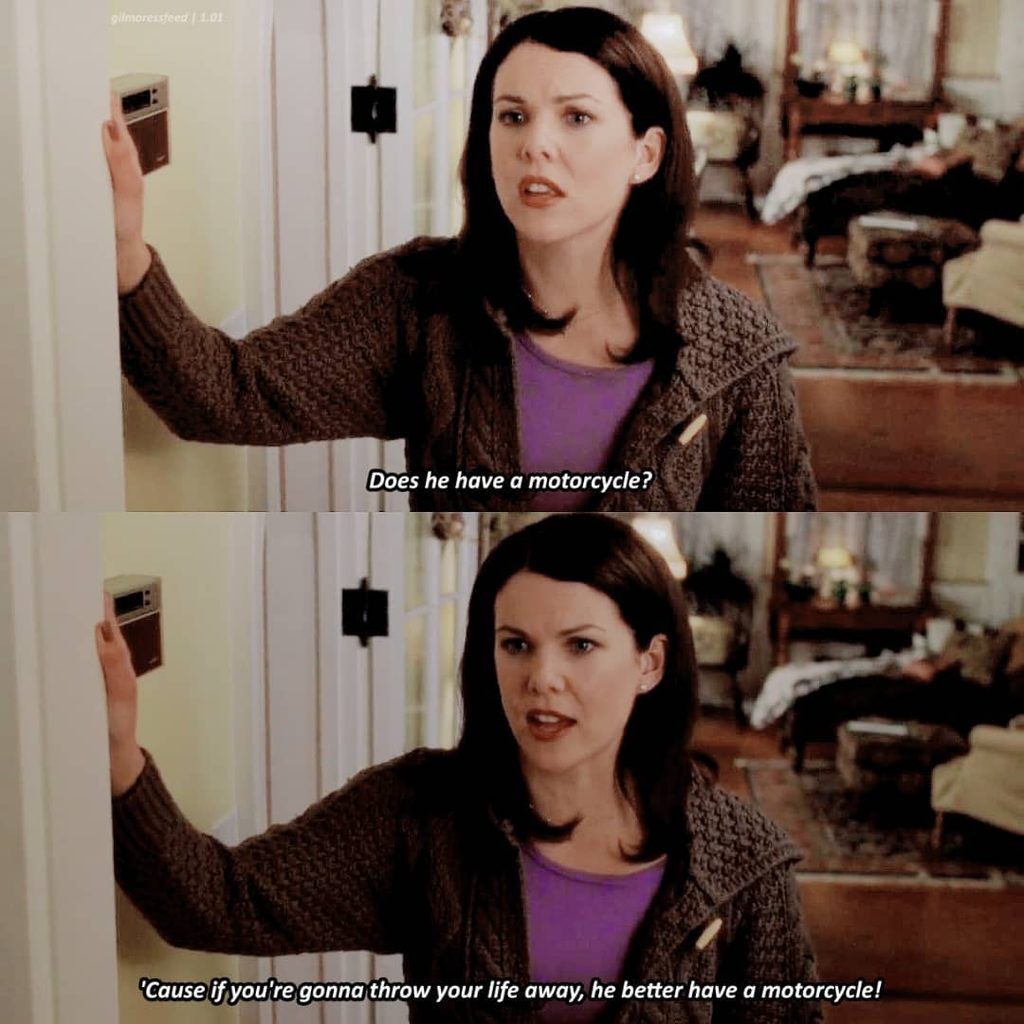
Lorelai is one of the engines of the show’s comfort because she refuses to let ordinary problems remain ordinary.
A concern about Rory’s romantic life becomes a motorcycle joke.
A stressful morning becomes a story.
A boring obligation becomes material.
That transforms the emotional atmosphere of the series.
The world is not easier because Lorelai is in it.
It simply becomes more narratable.
And sometimes that is what comfort really is:
Knowing that whatever happens, someone will help turn it into a story you can survive.
Rory and Lorelai could make a sidewalk feel like home
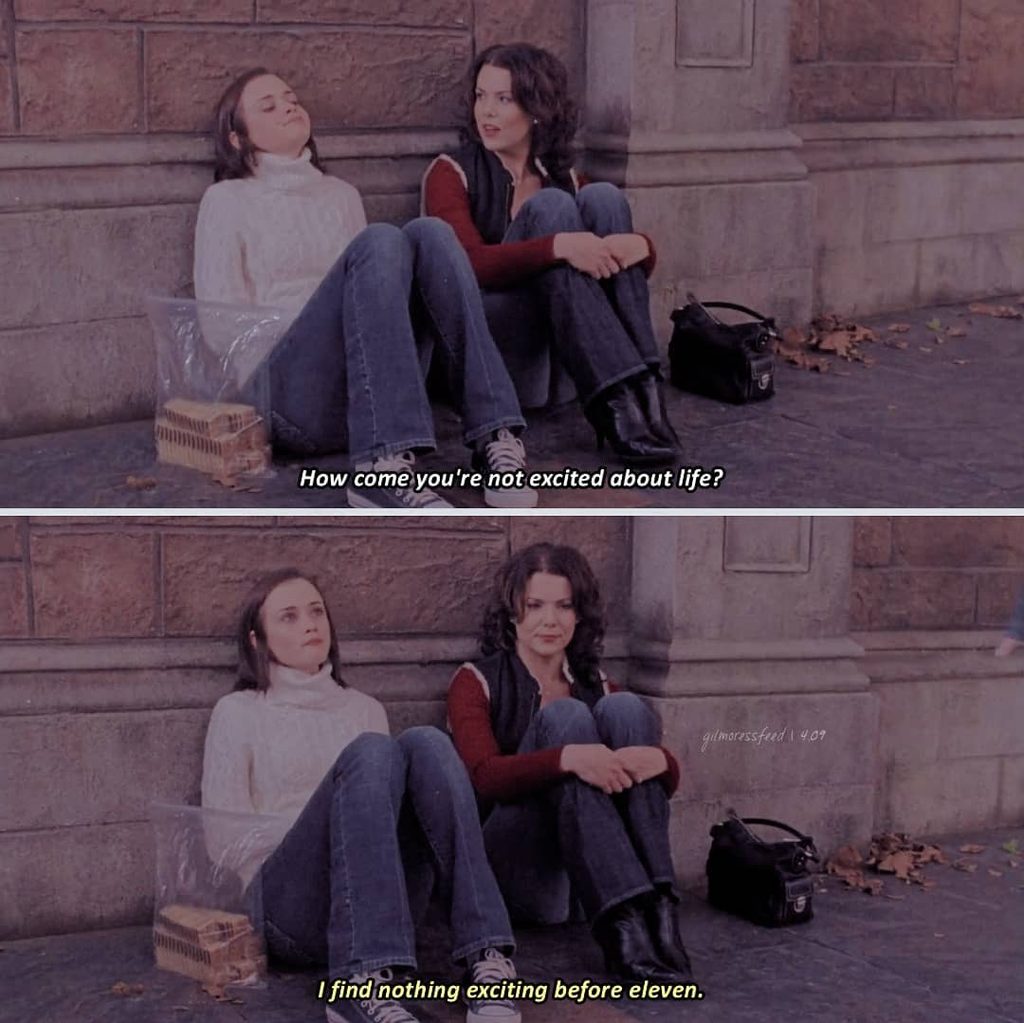
This image may be one of the best examples of Gilmore Girls comfort.
There is no diner.
No gazebo.
No festival.
No picturesque town square.
They are just sitting outside.
Talking.
And it still feels unmistakably like the show.
That tells us something important.
Stars Hollow matters enormously, but the true emotional home of the series is the relationship between people.
Put Lorelai and Rory against a stone wall with food beside them, and the rhythm is still there.
That is why fans can associate comfort with scenes that are visually plain.
The comfort lives in the familiarity of the exchange.
Even romantic closure works because the place remembers them

Luke and Lorelai meeting in the town environment after everything they have been through carries emotional weight because viewers remember so many earlier versions of them occupying similar spaces.
Stars Hollow functions almost like a memory system.
Every corner feels connected to something else.
A previous conversation.
A misunderstanding.
A town event.
A coffee.
A fight.
A first step toward something neither character was ready to name.
When Luke and Lorelai finally reconnect emotionally, the setting makes it feel less like a new event and more like a return.
That is what nostalgia often is:
Not wanting to go backward exactly.
Wanting to feel the continuity between who you were and who you became.
Gilmore Girls gave viewers a place where ordinary life mattered
That may be the secret.
The show does not require life-changing events to create emotional meaning.
Breakfast matters.
Phone calls matter.
A conversation while walking somewhere matters.
A joke about dinner tomorrow matters.
A quiet thank-you matters.
That is why Gilmore Girls can remain comforting after viewers know every major plot point.
The plot is no longer the reason to return.
The rhythm is.
You return because you remember how it feels to sit at Luke’s.
You remember how Rory reacts when Lorelai says something ridiculous.
You remember Paris arriving like an emotional weather event.
You remember Emily turning dinner into psychological warfare.
You remember Luke pretending something is “no big deal.”
It feels familiar.
And sometimes familiarity is the deepest form of comfort television can offer.
What feels most like “home” in Gilmore Girls to you: Luke’s Diner, Stars Hollow, or simply the characters talking to each other?