- Paris Had 26 Enemies — And Somehow That Explains Her Perfectly
- The Secret Behind Paris Geller’s Confidence Was Anxiety
- Paris Didn’t Believe Everything Would Be Fine — So She Prepared for Everything Not to Be
Paris Geller enters Gilmore Girls like a force of nature.
Confident.
Aggressive.
Competitive.
Intimidating.
She speaks with the certainty of someone who has never doubted anything in her life.
Except that is not really Paris.
Paris doubts constantly.
She simply responds to doubt differently from most people.
Some people freeze.
Paris creates a spreadsheet.
Twenty-six enemies sounds reasonable to Paris
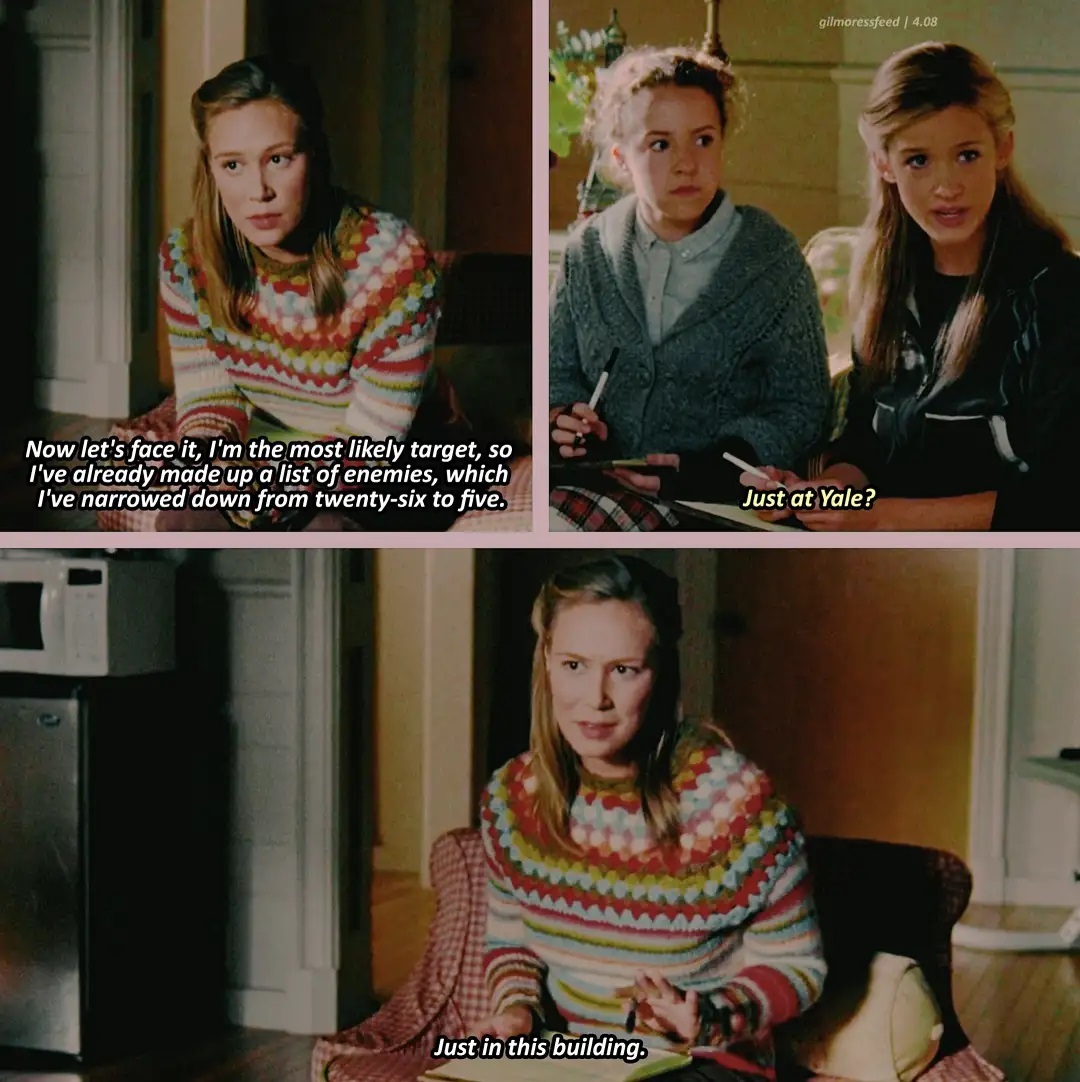
Paris believes someone may be targeting her.
So naturally, she has prepared a list of enemies.
Twenty-six possibilities.
Then she narrows it down.
Not globally.
Not across Yale.
Inside the building.
It is absurd.
And completely believable for Paris.
Because Paris rarely responds to fear by trying to calm herself down.
She turns fear into a project.
Control is her coping mechanism
Paris loves information.
Lists.
Schedules.
Rules.
Objectives.
Plans.
Because information creates the illusion that uncertainty can be defeated.
If she knows enough, maybe nothing can surprise her.
That mentality explains more than her academic intensity.
It explains Paris emotionally.
Rory threatens her before Rory even does anything

At Chilton, Rory quickly enters a social and academic world Paris has spent years trying to dominate.
Rory is intelligent.
Teachers like her.
Other students notice her.
Even romantic complications begin appearing around people Paris cares about.
For Paris, Rory is not simply “the new girl.”
She is uncertainty.
And Paris does not like uncertainty.
So she becomes aggressive.
The rivalry makes sense once you understand the fear underneath it
Paris wants achievement desperately.
Not casually.
Not because good grades would be nice.
Achievement means safety.
Validation.
Proof.
Control.
Another high-performing student therefore does not simply represent competition.
She threatens Paris’s carefully organized idea of who Paris is.
That is why the intensity seems disproportionate.
Rory eventually learns not to take all of it literally
That is important.
If every insult from Paris were treated as the complete truth of what Paris felt, the friendship would never survive.
Rory slowly learns to translate.
Anger may mean fear.
Competition may mean respect.
Interrogation may mean concern.
Excessive planning may mean panic.
Paris has an emotional language all her own.
Even Lorelai’s teenage pregnancy becomes a problem Paris wants organized
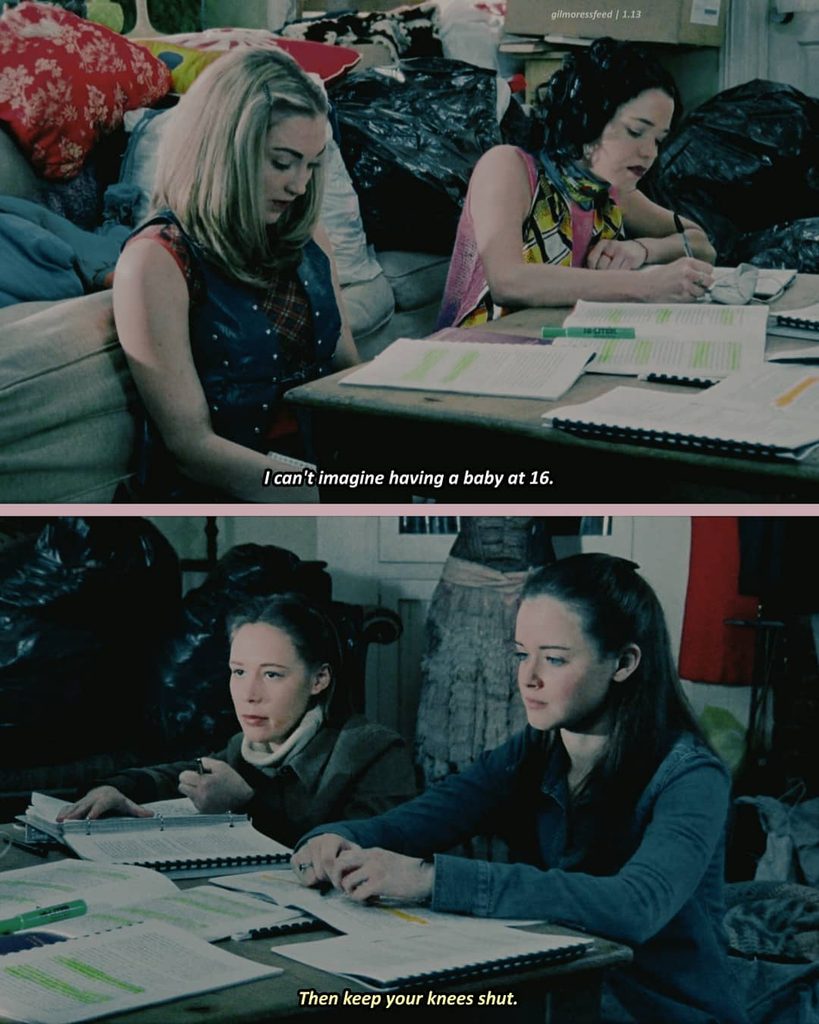
When Rory’s classmates discover Lorelai had Rory at sixteen, the conversation immediately becomes chaotic.
Some are fascinated.
Some ask questions.
Paris wants everyone back to work.
Of course she does.
A surprising piece of personal information has disrupted the schedule.
Paris’s natural solution:
Return to the task.
That instinct never really leaves her.
Paris becomes funnier as the stakes become more ordinary
The joke is often the mismatch.
Small problem.
Massive Paris response.
A dating problem becomes strategic planning.
A roommate problem becomes investigation.
A professional obstacle becomes war.
A suspicious situation produces an enemy list.
Paris does not possess an emotional “medium” setting.
That is why she becomes one of the show’s most memorable characters.
Yet the same quality makes her formidable
The traits that exhaust people also make Paris effective.
She prepares.
She asks difficult questions.
She works.
She survives disappointment.
She keeps moving.
Paris can experience an emotional catastrophe and somehow still have a résumé ready by morning.
There is something impressive about that.
She also reveals something important about high achievers
Confidence and anxiety can look surprisingly similar from the outside.
Someone extremely prepared may appear fearless.
Sometimes they are prepared precisely because they are afraid.
Paris does not necessarily believe things will work out.
She plans because she assumes something may go wrong.
And she wants to be ready when it does.
That makes her relationship with Rory especially interesting
Rory and Paris are both ambitious.
But Rory often expects the world to recognize good work.
Paris expects the world to attack.
That difference creates conflict.
It also means they can teach each other something.
Rory gives Paris occasional emotional softness.
Paris gives Rory a stronger survival instinct.
Neither becomes the other.
Both change.
Maybe Paris was never supposed to be “likable”
She was supposed to be recognizable.
The person who prepares too much.
Worries too much.
Competes too hard.
Plans for disasters nobody else believes will happen.
And then occasionally discovers that disaster was not the problem.
The fear of disaster was.
That is Paris Geller.
Terrified.
Prepared.
And somehow still moving forward.
Was Paris naturally aggressive—or was most of her intensity really anxiety and fear of losing control?