- The 11:00 vs. 12:00 Moment Explains Lorelai’s Entire Parenting Style
- Why Lorelai’s Parenting Worked Differently From Emily’s
- Gilmore Girls Was Always About Where Friendship Ends and Motherhood Begins
One of the most famous ideas surrounding Gilmore Girls is that Lorelai and Rory are not simply mother and daughter.
They are best friends.
They share clothes.
Food.
Coffee.
Movies.
Jokes.
Secrets.
That closeness is one of the show’s greatest appeals.
But Lorelai’s parenting becomes more interesting when the series reminds us that friendship is only part of the relationship.
Because every so often, Lorelai has to decide:
Do I want Rory to like me right now?
Or do I need to be her mother?
Lorelai’s instinct is negotiation
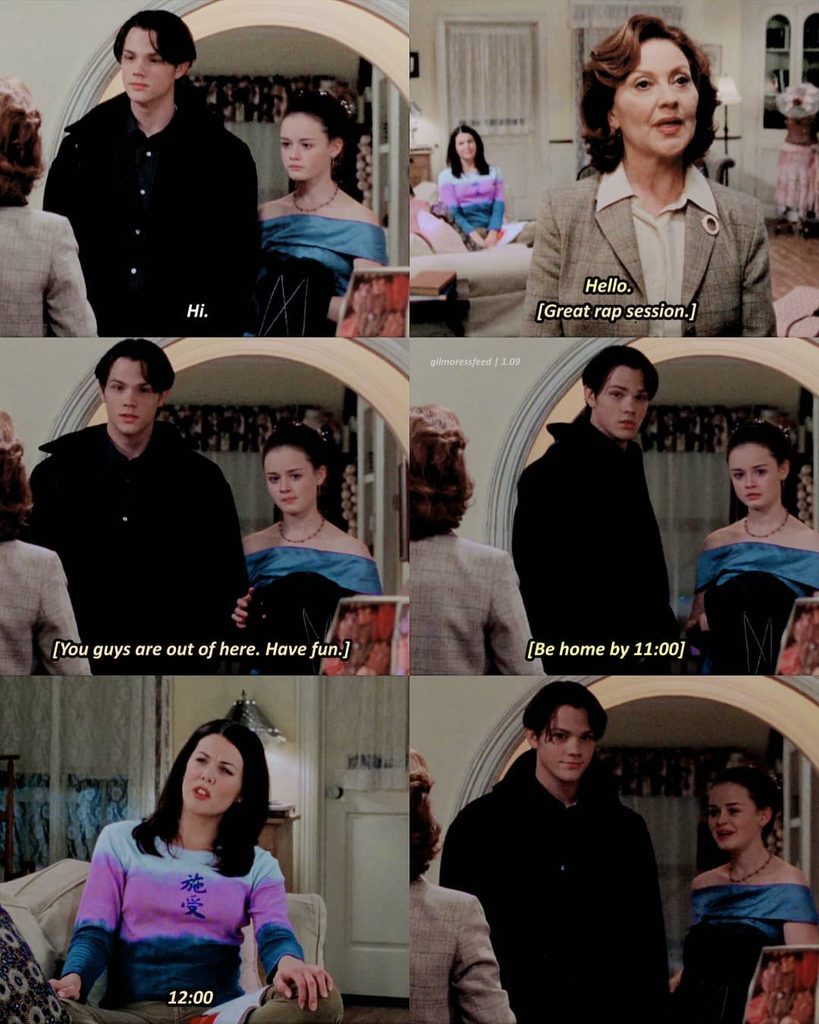
An adult gives Rory a curfew.
11:00.
Lorelai immediately counters.
12:00.
It is a tiny joke that perfectly illustrates how differently Lorelai approaches authority.
Emily establishes rules vertically.
Parent above.
Child below.
Lorelai prefers negotiation.
She wants Rory to participate in the logic of the rule.
That can feel unusually respectful for a teenager.
It can also become complicated when boundaries genuinely matter.
Lorelai is determined not to become Emily
This is essential to understanding her parenting.
Every mother makes choices influenced by how she was raised.
Sometimes we imitate our parents.
Sometimes we construct ourselves in direct opposition to them.
Lorelai often chooses the second path.
If Emily is formal, Lorelai becomes casual.
If Emily values obedience, Lorelai values communication.
If Emily controls, Lorelai negotiates.
If Emily creates distance, Lorelai creates closeness.
Rory benefits enormously from that warmth.
But reacting against your own upbringing can create blind spots too.
Lorelai wants Rory to tell her everything
That is the dream of many parents.
But teenagers generally want independence.
Rory’s growth therefore places pressure on the friendship model.
Dating changes.
School changes.
Secrets appear.
Mistakes appear.
Suddenly Lorelai has to enforce boundaries on someone she has encouraged to see her as an equal conversational partner.
That is difficult.
The deer scene shows what Lorelai does best
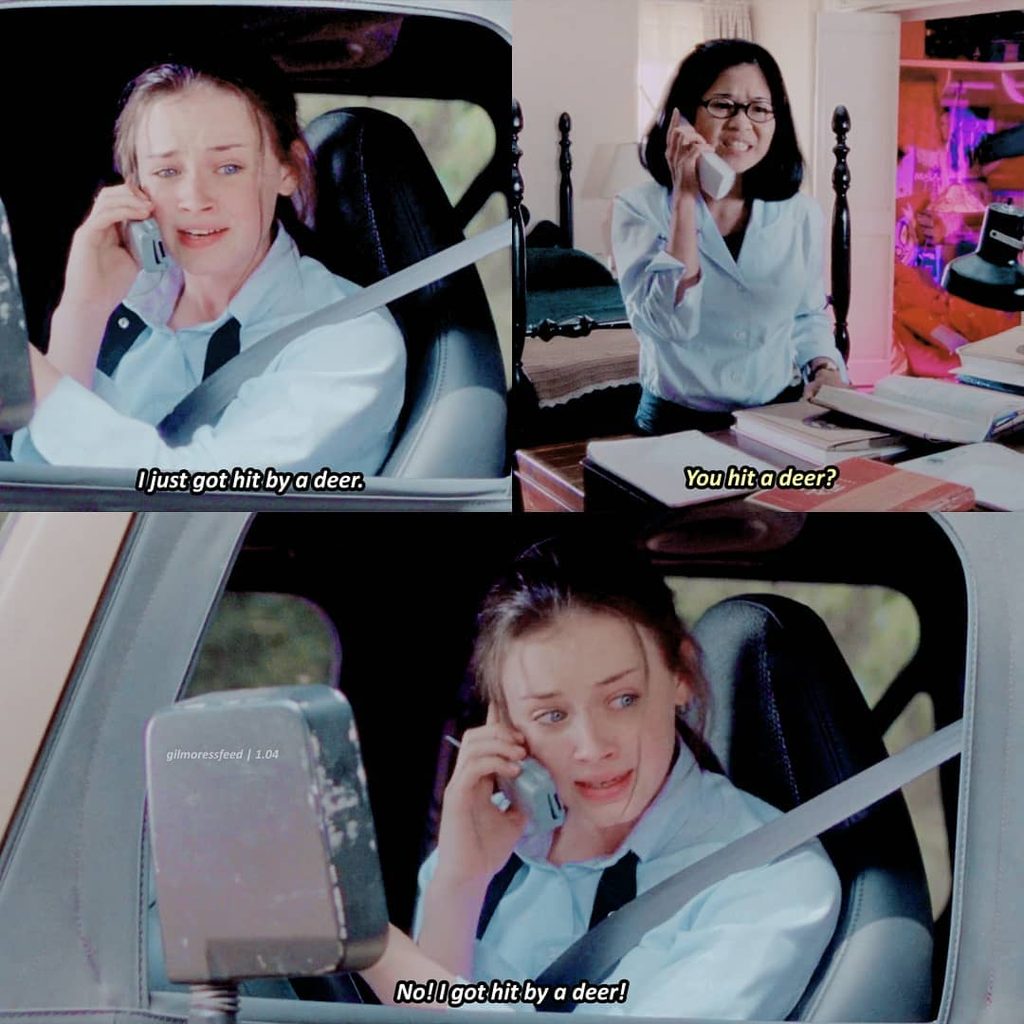
Rory is already having a terrible morning.
Then a deer literally collides with her vehicle.
The phone conversation is classic comedy:
“I just got hit by a deer.”
“You hit a deer?”
“No! I got hit by a deer!”
What makes scenes like this work is not just the joke.
Rory immediately calls someone from her emotional home base.
In moments of panic, she reaches outward.
That is something Lorelai succeeded in creating.
Rory may be afraid of consequences.
But she rarely doubts that her mother is fundamentally on her side.
That emotional safety matters
A child who never disappoints you does not test the relationship.
The important test is what happens when they do.
Lorelai and Rory eventually experience conflict serious enough to damage their famous closeness.
That is when the mother-daughter structure becomes unavoidable.
Friendship cannot solve every disagreement.
Sometimes a parent believes a child is making a harmful choice.
Sometimes the child believes the parent has stopped listening.
Love does not automatically eliminate that tension.
Rory’s academic anxiety also complicates Lorelai’s role
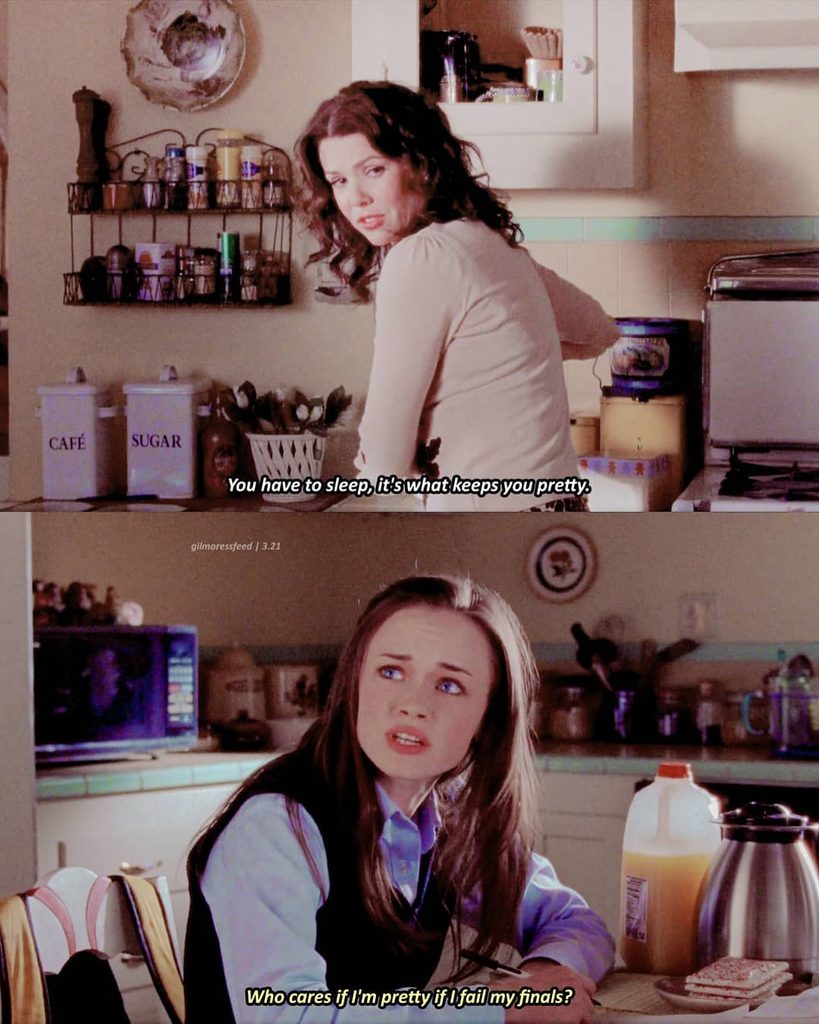
Rory is exhausted.
She is worried about finals.
Lorelai tries to bring perspective.
Sleep matters.
Health matters.
Rory is still thinking about performance.
“Who cares if I’m pretty if I fail my finals?”
This is where Lorelai often acts less like Rory’s friend and more like a counterweight.
Rory pushes.
Lorelai reminds her there is life outside the goal.
Sometimes that works.
Sometimes it does not.
But Rory needs someone who sees more than the report card.
Lorelai’s parenting is imperfect precisely because it is personal
There is no professional distance.
Everything involving Rory matters intensely to her.
Rory’s happiness.
Relationships.
School.
Mistakes.
Future.
Lorelai does not merely raise Rory.
She built a huge part of her own identity around being Rory’s mother.
That closeness creates love.
It also raises the stakes whenever Rory chooses differently from what Lorelai hopes.
The best parts of their relationship are not the “best friend” parts
They are the moments when both roles coexist.
Lorelai can tease Rory and protect her.
Listen and disagree.
Give freedom and worry.
Break rules and establish them.
Friendship is part of the relationship.
Motherhood is larger.
That is why the relationship still feels real
A perfect mother-daughter friendship would become fantasy.
Lorelai and Rory hurt each other.
Misread each other.
Become frustrated.
Create distance.
Return.
That cycle is uncomfortable.
It is also human.
Lorelai’s biggest achievement may not have been creating a daughter who never pulled away.
It was creating a relationship strong enough that pulling away did not have to mean losing each other forever.
Was Lorelai more effective when she treated Rory like a friend—or when she acted clearly like her mother?