- The Real Comfort of Gilmore Girls Was Knowing Nobody Had to Fall Apart Alone
- Why Luke’s Diner, Lorelai’s House and Friday Night Calls Felt Like Emotional Home
Gilmore Girls contains a surprising amount of chaos for a show people call comforting.
Breakups.
Family conflict.
Career problems.
School stress.
Bad decisions.
Arguments.
Panic.
People misunderstanding each other at incredible speed.
And yet viewers return to it when they want to feel safe.
Why?
The answer may not be the fall leaves.
It may not even be Stars Hollow.
The deeper comfort is that when life goes wrong, almost everyone on Gilmore Girls has somewhere—or someone—to go to.
Rory and Lorelai have Luke’s
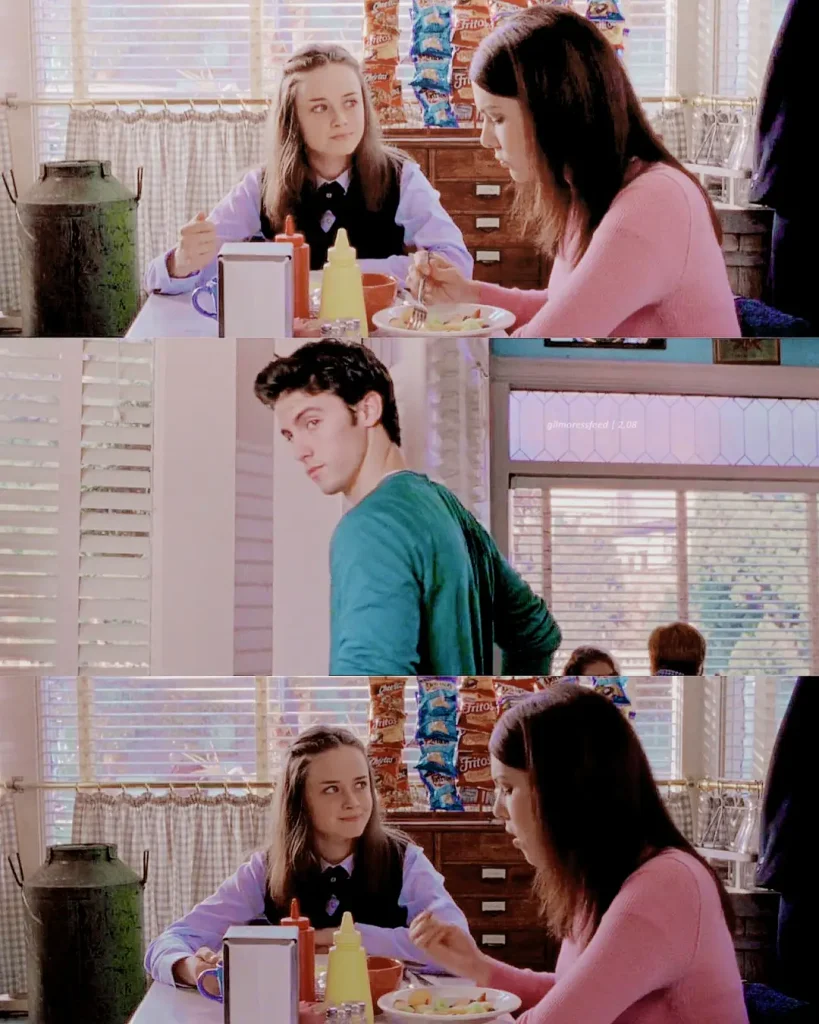
A diner table is one of the most recognizable emotional spaces in the series.
Rory and Lorelai do not need an occasion to be there.
That is the point.
Luke’s is woven into ordinary life.
Breakfast.
Coffee.
News.
Romance.
Complaints.
Waiting.
Watching people walk past the window.
Nothing needs to happen for the space to matter.
That is how real comfort works.
You return before you even realize you need comfort.
Lorelai and Rory make home through conversation
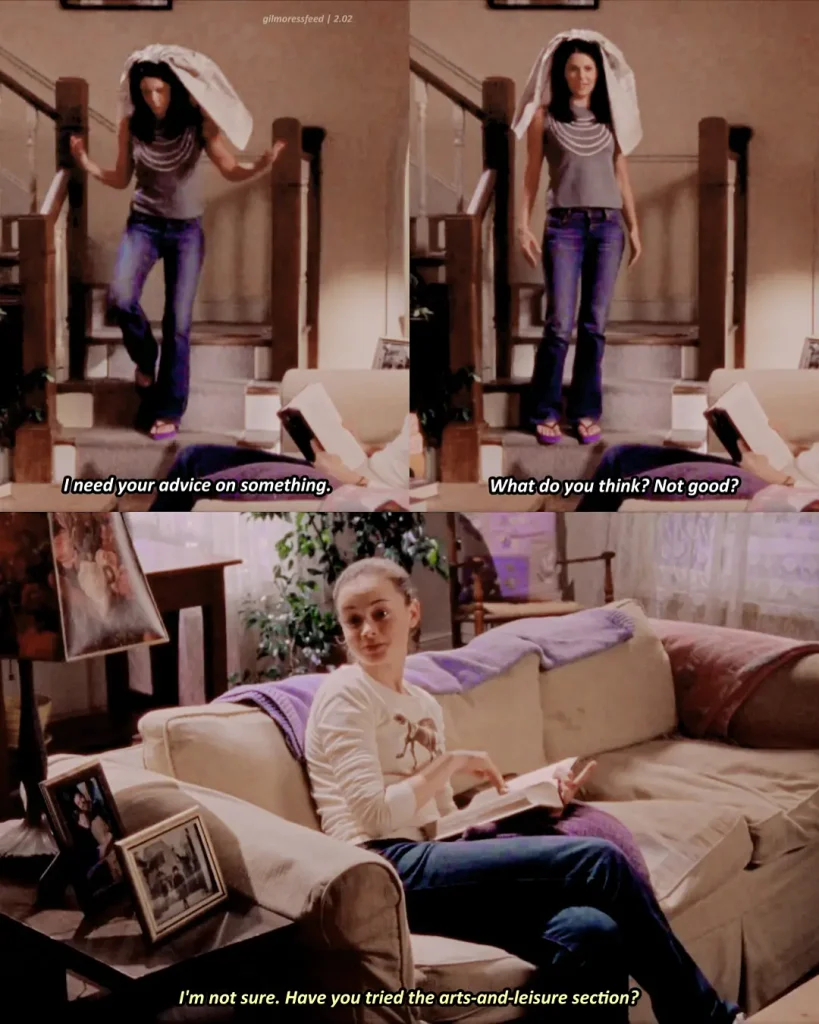
Lorelai asking Rory for advice turns the mother-daughter hierarchy upside down.
Again.
It is funny.
It is also cozy in a way beautiful production design alone cannot create.
Home is the place where you can walk downstairs wearing something questionable and ask another person whether you have made a terrible decision.
Home is where the answer can be sarcastic.
There is no ceremony.
Only familiarity.
That emotional informality is one of the show’s strongest comfort mechanisms.
Lorelai and Emily can fight—and still call each other
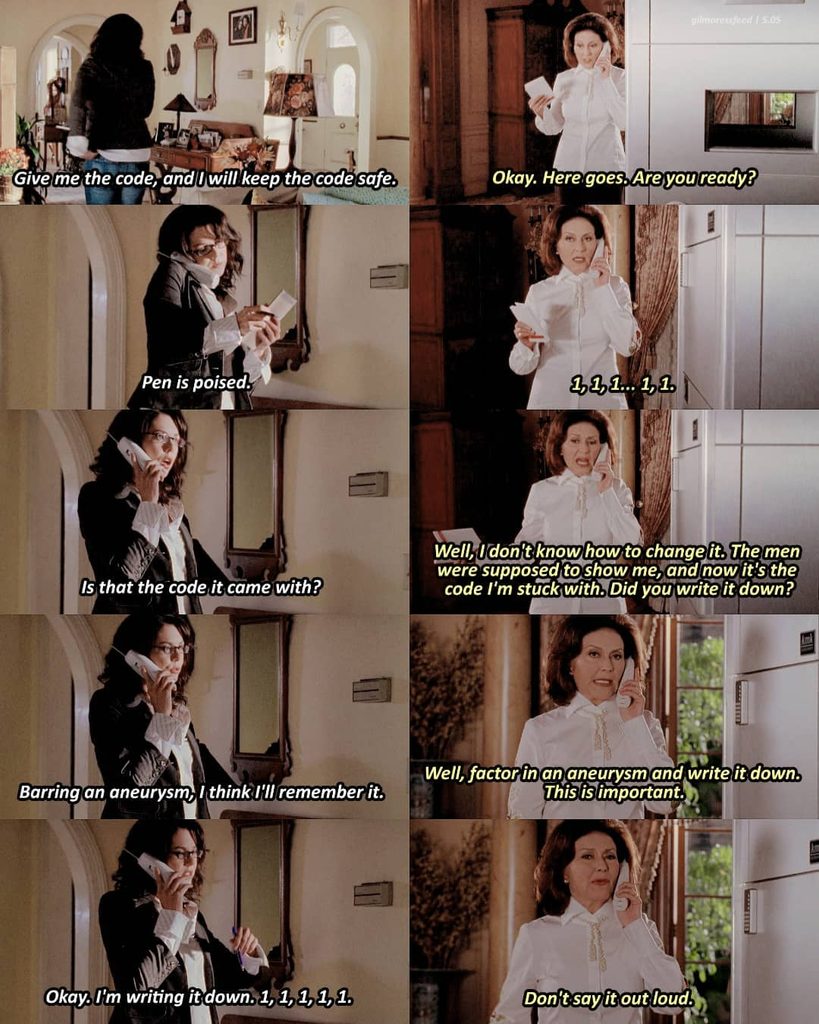
This is one of my favorite forms of Gilmore Girls comfort because it is not obvious.
Lorelai and Emily have a difficult relationship.
Their phone calls frequently become arguments.
Yet they keep calling.
A ridiculous security-code discussion can contain irritation, generational conflict and comedy all at once.
But underneath it is continuity.
Emily expects Lorelai to be reachable.
Lorelai answers.
Their relationship may be messy.
It remains a relationship.
There is something oddly comforting about that persistence.
Even conflict has familiar rules
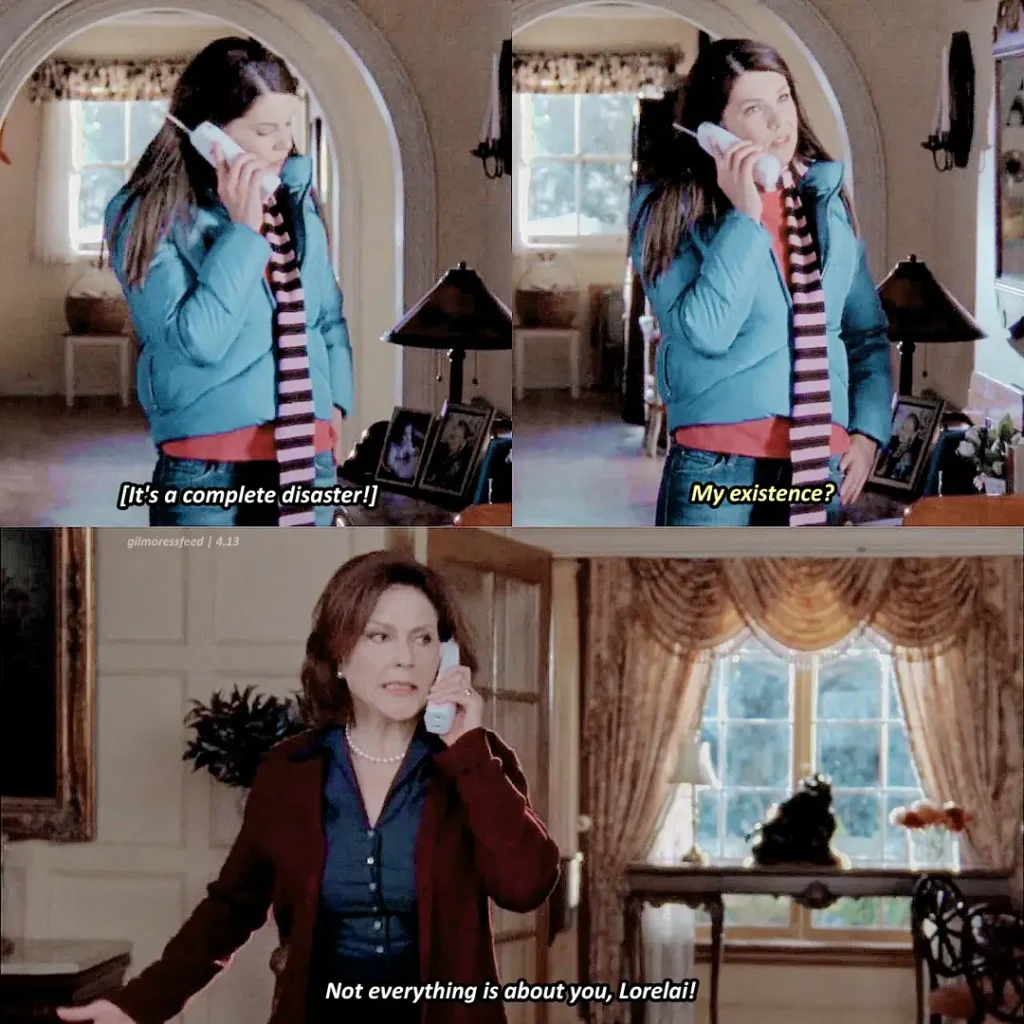
Lorelai and Emily can move from misunderstanding to accusation almost instantly.
And yet viewers learn the rhythm.
Emily says something.
Lorelai interprets it through years of history.
Emily becomes offended by the interpretation.
Lorelai jokes.
Emily refuses to laugh.
Again and again.
Real family relationships often work this way.
They have scripts.
Not always healthy ones.
But familiar ones.
That familiarity helps explain why even tense episodes can remain strangely cozy.
Luke’s coffee is really a form of care
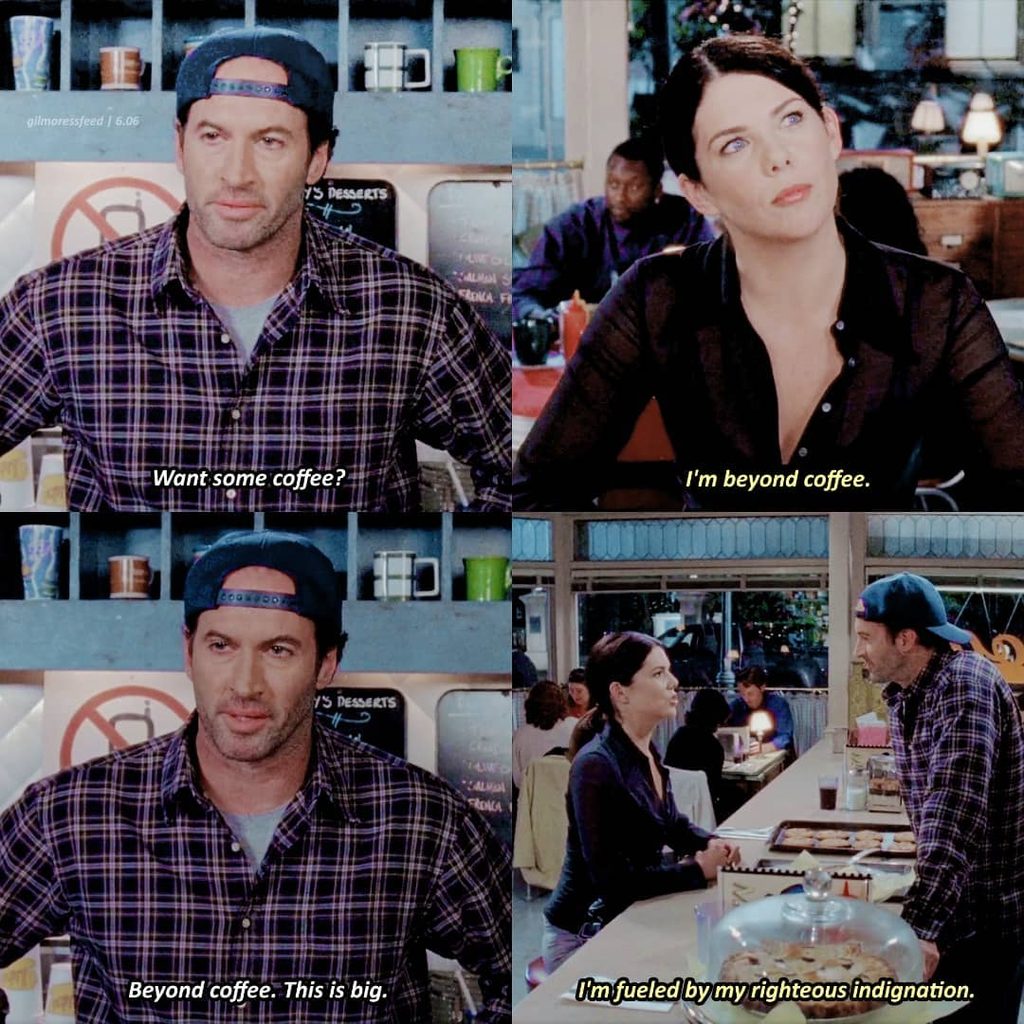
“Want some coffee?”
In almost any other show, it is nothing.
On Gilmore Girls, it carries history.
Luke knows Lorelai wants coffee.
Lorelai knows Luke will provide it.
They can use coffee to begin conversations neither knows how to begin directly.
It is routine transformed into emotional language.
This is why food and drink matter so much throughout the series.
Comfort is rarely announced.
It is served.
Coffee.
Breakfast.
Takeout.
Dinner.
Food becomes a reason for people to gather while more important things happen around it.
Comfort television is really about predictability of care
This is why you can know every episode and still return.
You already know Rory will sit across from Lorelai.
You already know Lorelai will call someone when chaos arrives.
You already know Luke will pretend not to care while caring enormously.
You already know Emily will find a way to make a simple task unnecessarily formal.
The surprise is gone.
The emotional reliability remains.
That is what comfort television provides.
Not suspense.
Reassurance.
Stars Hollow promises that someone will notice
There is another important element.
In Stars Hollow, anonymity is almost impossible.
That can be invasive.
It can also be comforting.
Someone notices when you arrive.
Someone notices when you leave.
Someone has an opinion about your relationship.
Someone knows your usual order.
Someone knows your mother.
Someone remembers what happened three festivals ago.
In real life, that amount of attention might be exhausting.
On television, it creates belonging.
Nobody disappears quietly.
That is why the show still feels warm during messy episodes
The characters do not live stress-free lives.
They live connected lives.
Those are different things.
And maybe connection—not coziness—is the real heart of Gilmore Girls.
The comforting fantasy is not that nothing terrible happens.
It is that when something happens, there is still a table somewhere.
A phone number.
A couch.
A diner.
A mother.
A daughter.
A friend.
A grumpy man with coffee.
Somewhere to go.
That may be why the show still feels like home.
Which Gilmore Girls place feels most comforting to you: Luke’s, Lorelai’s house, the Gilmore mansion, or somewhere else?