- Rewatching Gilmore Girls as an Adult Changes Who You Sympathize With
- The Older You Get, the More Gilmore Girls Becomes a Show About Uncertainty
When you first watch Gilmore Girls, it is easy to think you understand the structure of the show.
Rory is the responsible one.
Lorelai is the witty, chaotic one.
Emily is the difficult one.
Paris is the intense one.
And the adults, however flawed, mostly seem like adults.
Then you watch the series again later in life, and something shifts.
Suddenly, the categories stop holding.
Rory seems more pressured than simply gifted. Lorelai feels less effortlessly free and more like someone constantly converting anxiety into humor. Emily becomes less of a villain and more like a woman whose love is tangled up with habits she doesn’t know how to change. Even scenes that once felt small start carrying a different emotional charge.
That’s because Gilmore Girls changes when you watch it as an adult.
Or rather, you change.
And one of the biggest things adulthood teaches you is this: almost everyone is improvising.
Ambition looks different when you know success is not a straight line

Rory’s early image at the newsroom is funny, awkward, and endearing. It captures exactly the version of her that many viewers first connect with: smart, capable, slightly out of place, but always trying.
When you are younger, it is easy to read Rory’s story as one long academic and emotional trajectory. Study hard, care deeply, work sincerely, and life should reward that effort.
Adulthood complicates that fantasy.
On a rewatch, scenes like this start to feel more fragile. Rory is not simply a promising student. She is someone moving through environments where intelligence, insecurity, politeness, class, and self-expectation all collide. Her competence is real. So is her vulnerability.
That combination makes her story more emotionally complicated than it first appears. Rory is not just working toward a future. She is trying to become the version of herself that everyone has already told her she is supposed to be.
That is a very adult kind of pressure.
Young relationships start to look less romantic and more uncertain
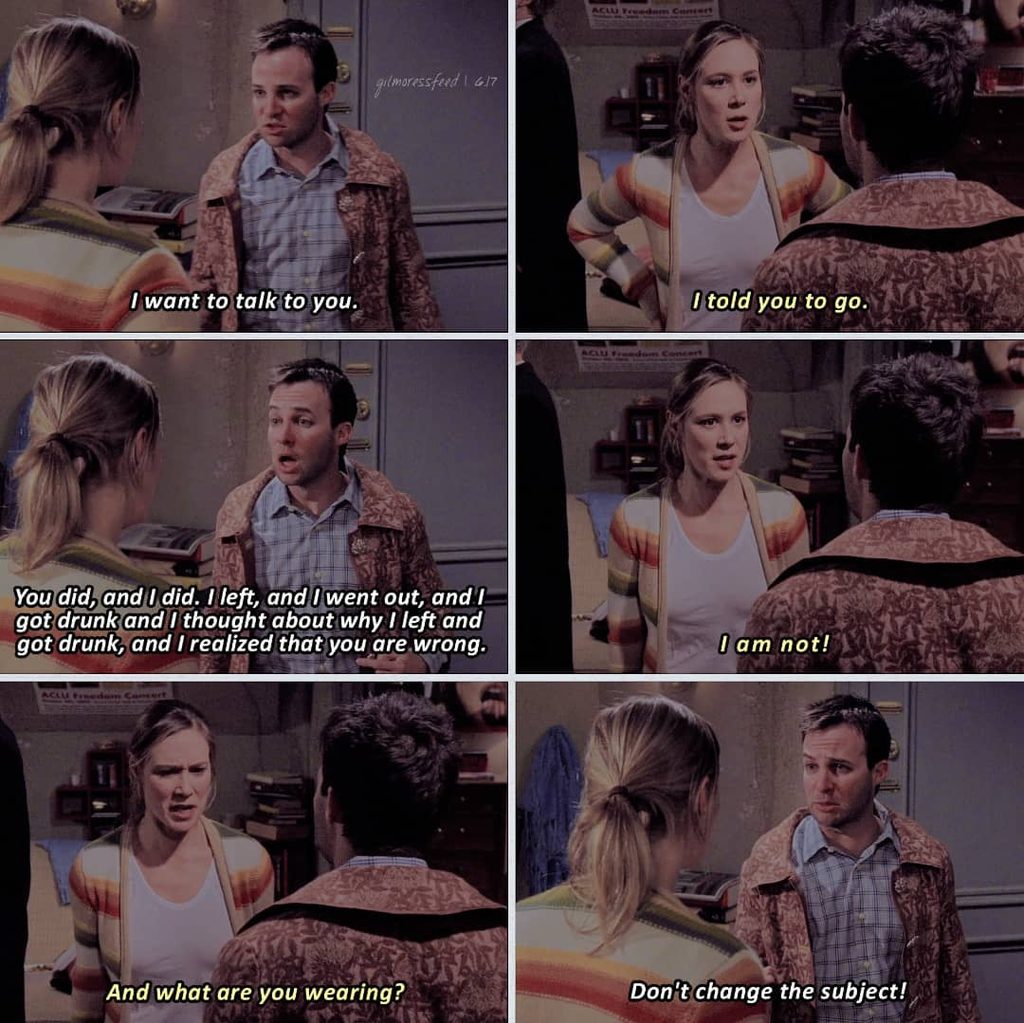
A lot of younger viewers approach relationship conflicts on TV by instinctively choosing sides.
Who was right? Who was wrong? Who should have apologized first?
But adulthood often changes how those scenes read. It becomes easier to see that what looks like dramatic conflict is often two underprepared people struggling to communicate what they need.
That is what makes scenes like Lane’s argument so useful on a rewatch. The point is not just the fight itself. The point is the uncertainty under it. Young adulthood is full of people insisting they know what they want while privately panicking that they may not know how to build any of it.
That truth runs all through Gilmore Girls. The show is full of people making declarations. It is also full of people backtracking, stumbling, and improvising right after those declarations fall apart.
Adulthood on Gilmore Girls is mostly people trying to build a life while exhausted

Lorelai and Sookie dreaming about their own inn is one of those moments that becomes more moving with age.
As a younger viewer, you might see it as charming ambition. As an adult, it can feel like something deeper: the rare optimism of people who are overworked, imperfect, and still willing to believe they can build something meaningful together.
That is what adulthood often looks like in real life. Not confidence, exactly. Not certainty. Just a stubborn willingness to keep imagining a better arrangement for yourself.
Lorelai is not fearless. Sookie is not serene. Neither woman has everything under control. But that is precisely why the dream matters. It is not the fantasy of people whose lives are already stable. It is the hope of people creating stability as they go.
That lands much harder when you know how difficult that kind of reinvention really is.
Family awkwardness becomes more heartbreaking than funny
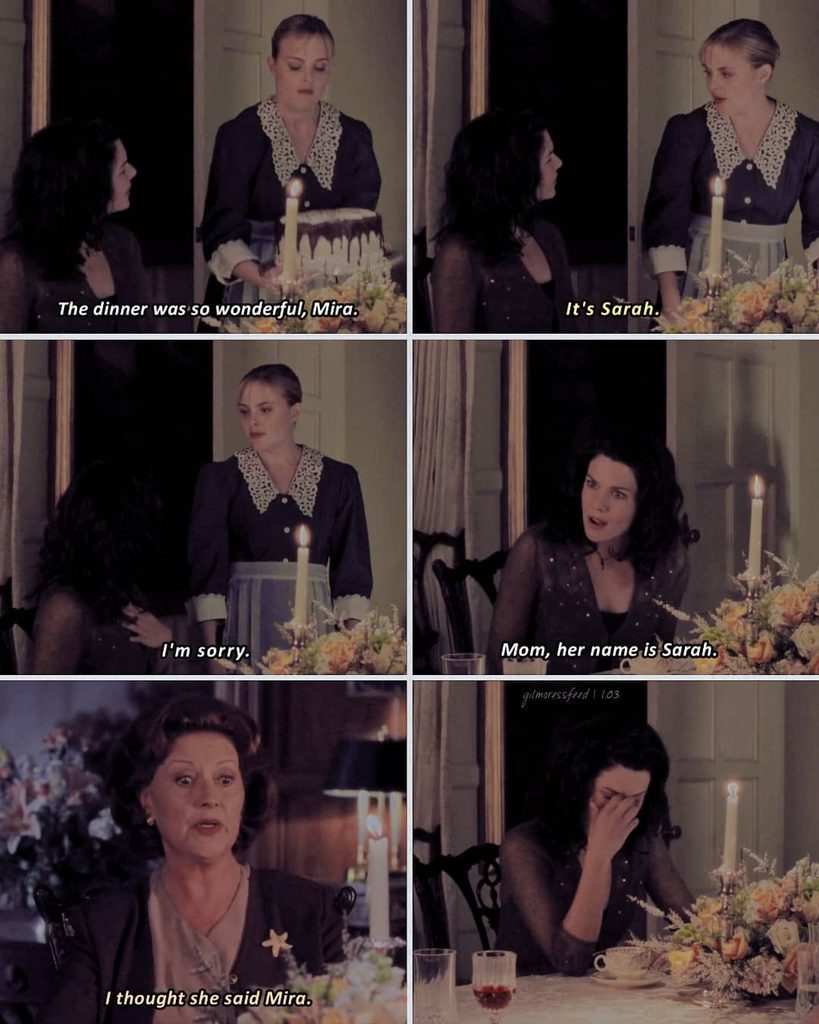
Scenes involving Emily used to play very differently for a lot of viewers. When you are younger, it is easy to focus on the discomfort, the rigidity, the secondhand embarrassment. Emily seems impossible. Lorelai seems understandably irritated.
Then adulthood adds another layer.
You start noticing the loneliness in Emily’s need for order. You start seeing how quickly she reaches for control when she does not know how to create closeness. You realize that what makes these dinners painful is not just bad manners or class tension — it’s a family repeatedly failing to love each other in a language the other person can receive.
That recognition does not excuse Emily’s behavior. But it does transform the emotional temperature of scenes like this. They stop being simply uncomfortable. They become sadder, and more revealing.
Rewatching Gilmore Girls means giving up the idea that any of them had it figured out
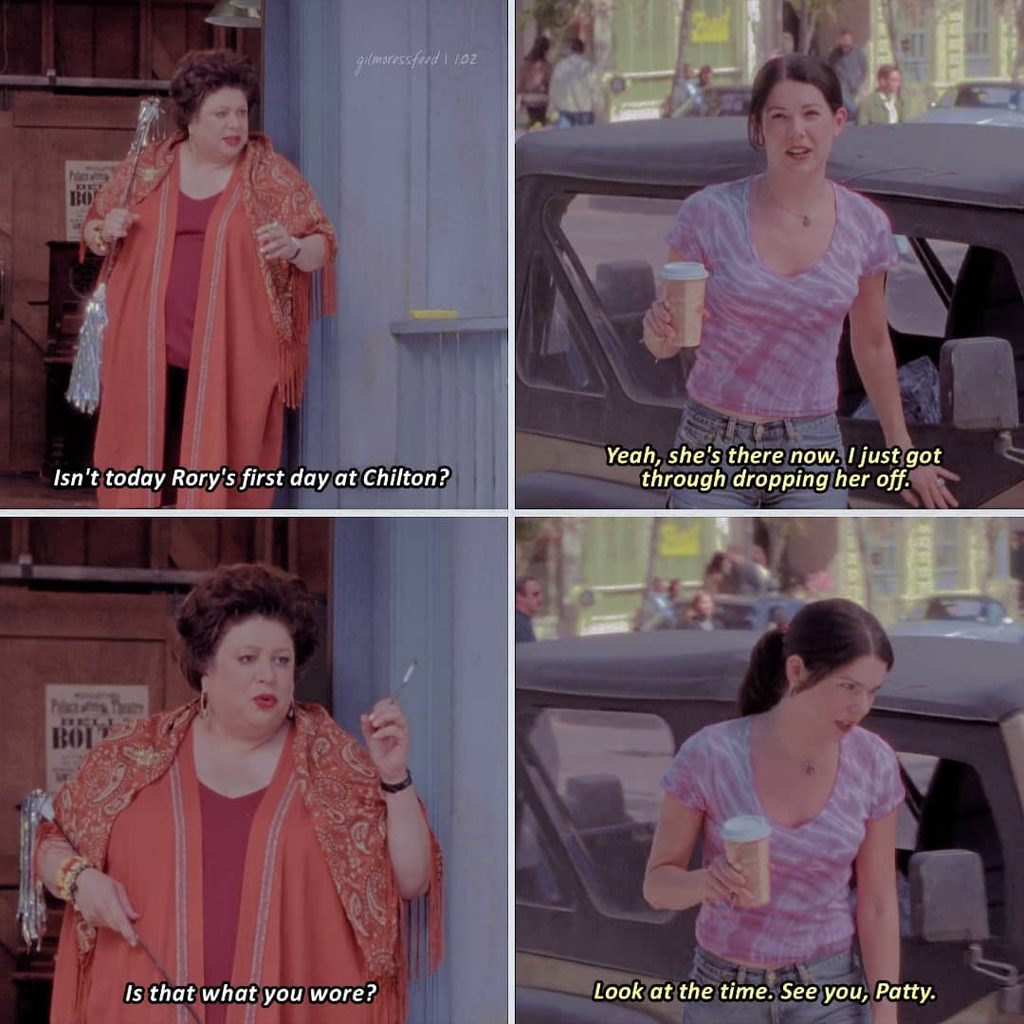
Even the iconic early moments of the series feel different later on.
Rory’s first Chilton day once plays like the beginning of a bright academic chapter. On rewatch, it also feels like a snapshot of Lorelai holding together a life through sheer willpower and speed. She is funny because she is stressed. She is energetic because stopping would force her to sit with how much is at stake.
That realization changes the whole show.
You begin to see that the adults are not “adults” in the polished, stable sense many younger viewers imagine. They are simply older people carrying fear, hope, bad habits, dreams, love, embarrassment, and unfinished emotional business.
Just like everyone else.
And that may be why Gilmore Girls remains such a powerful rewatch. It doesn’t only offer nostalgia for youth. It offers recognition.
The older you get, the more you see that this was never a story about some people having life figured out while others grew up.
It was a story about everyone growing up in different directions at the same time.
And once you see that, the show becomes something richer than comfort TV.
It becomes a reminder that adulthood is not a finish line.
It’s a series of improvisations.
Which Gilmore Girls character makes more sense to you now than they did the first time you watched the show?