- The Older Rory Got, the More She Had to Understand Her Mother
- Why Lorelai and Rory’s Relationship Worked Best When It Became More Honest
One of the reasons Gilmore Girls still resonates is that it never treats the mother-daughter bond as simple.
Lorelai and Rory love each other deeply. That part is never really in doubt. They are close, funny, affectionate, unusually communicative, and emotionally intertwined in a way television viewers immediately understood. They do not look or sound like the average TV mother and daughter. That was part of the show’s appeal from the beginning.
But one of the richest parts of the series is not just that Rory grows up. It’s that as Rory grows up, she slowly has to confront something harder: her mother is not just “Mom.” She is a full person with her own history, wounds, longings, and contradictions.
That realization changes everything.
Early on, Lorelai built a world that made Rory feel protected

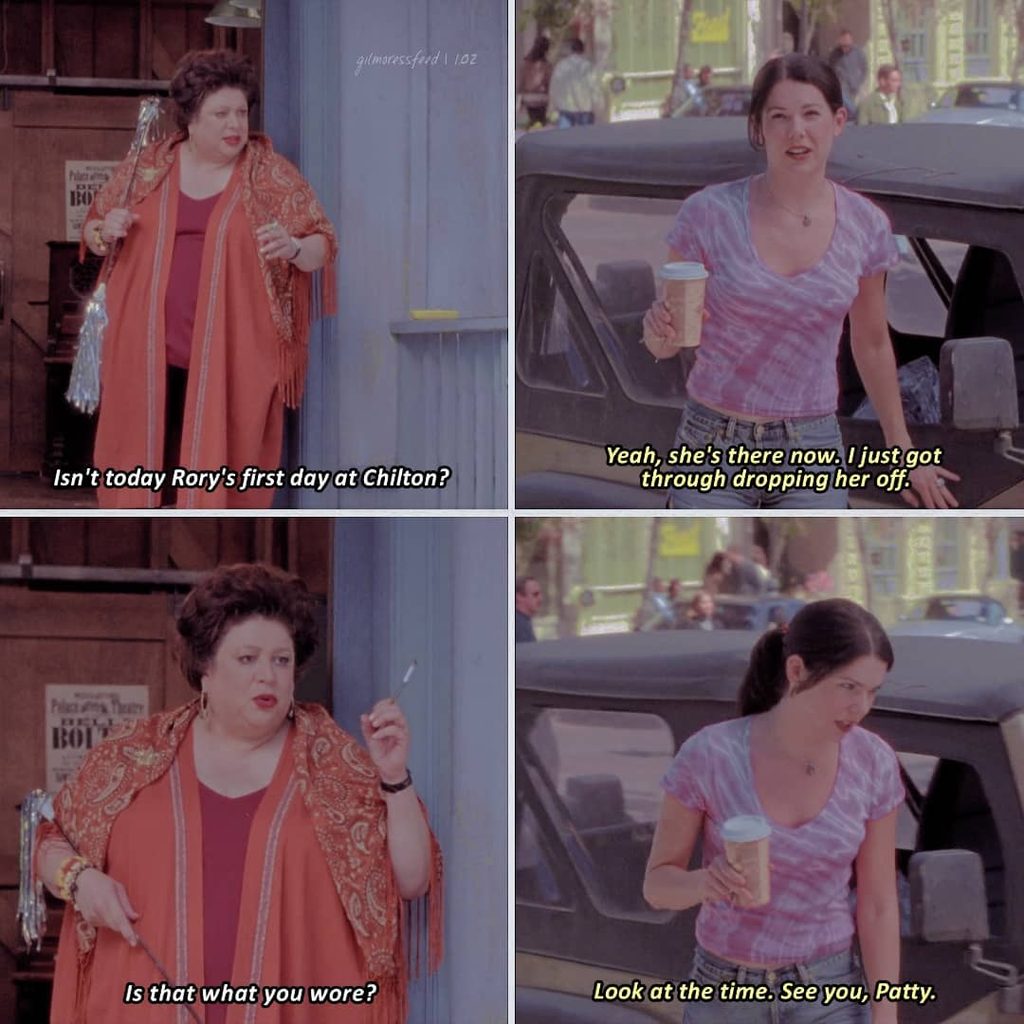
The early-season image of Lorelai and Sookie talking around Rory’s first Chilton day carries more emotional weight than it may seem at first. On the surface, it is funny and chaotic, full of the show’s usual quick rhythm. But underneath it is one of Lorelai’s defining traits as a parent: she has built an entire emotional environment around making Rory feel safe enough to move forward.
Lorelai wants Rory to have opportunities she didn’t have. She wants to protect her, encourage her, and push her toward a future that feels chosen rather than imposed.
That’s why so much of Gilmore Girls works emotionally. Rory is not simply being raised. She is being intentionally given a different life.
And yet the older Rory gets, the more she begins to understand the cost of the choices that made that life possible.
At some point, daughters begin to notice their mothers as women
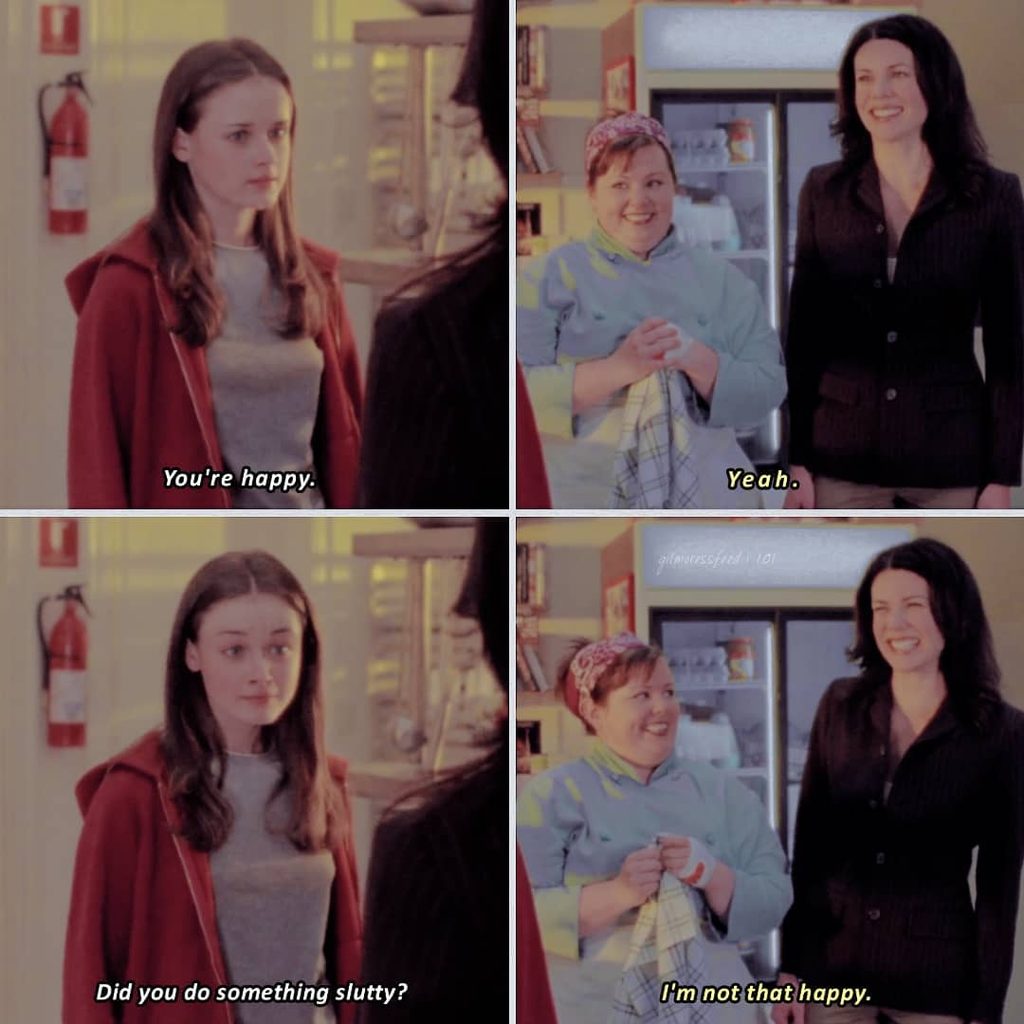
The exchange in which Rory notices Lorelai is happy is small, but it is incredibly revealing.
This is not a little girl asking her mother a casual question. This is a daughter recognizing emotional change in someone she knows well. The moment is playful, but it signals a shift in perspective. Rory is old enough now to read her mother not just as authority or caretaker, but as a woman with a private emotional life.
That shift is one of the most interesting coming-of-age elements in the whole series.
Because growing up does not only mean learning about yourself. Sometimes it means realizing your parents had full interior lives before you ever understood them. They had heartbreak before you. Desire before you. Fear before you. They made choices that shaped your life long before you were in a position to judge them.
Rory’s relationship with Lorelai deepens whenever she begins to see those truths more clearly.
Family love in Gilmore Girls often comes wrapped in discomfort
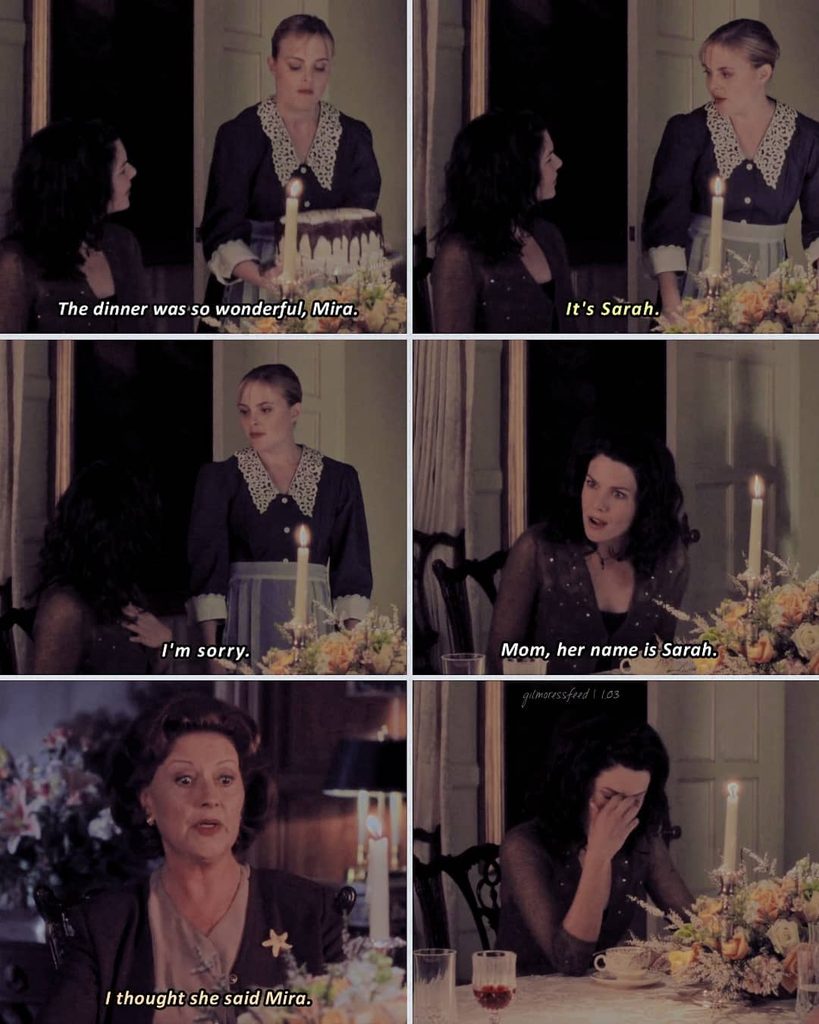
If Lorelai and Rory represent one version of womanhood and family, Emily represents another. And scenes like the awkward dinner involving the maid’s name capture exactly why the Gilmore family remains so fascinating.
Emily is not merely “controlling.” That word is too easy. She is deeply invested in standards, presentation, rituals, and correctness because those things are the language through which she understands order. And order, for Emily, is often tied to care.
But intention does not erase impact. The discomfort Lorelai feels in those spaces is real. She does not simply reject her mother out of adolescent rebellion. She rejects a structure of life that has always made her feel managed rather than known.
What makes Gilmore Girls so good is that it rarely lets the audience settle into simple moral sides. Emily can be frustrating and still wounded. Lorelai can be independent and still reactive. Rory can love both women while also being pulled between their values.
That is what makes the family drama so durable. No one is standing outside the system. They are all shaped by it.
Lorelai’s dreams shaped Rory’s childhood more than Rory always realized
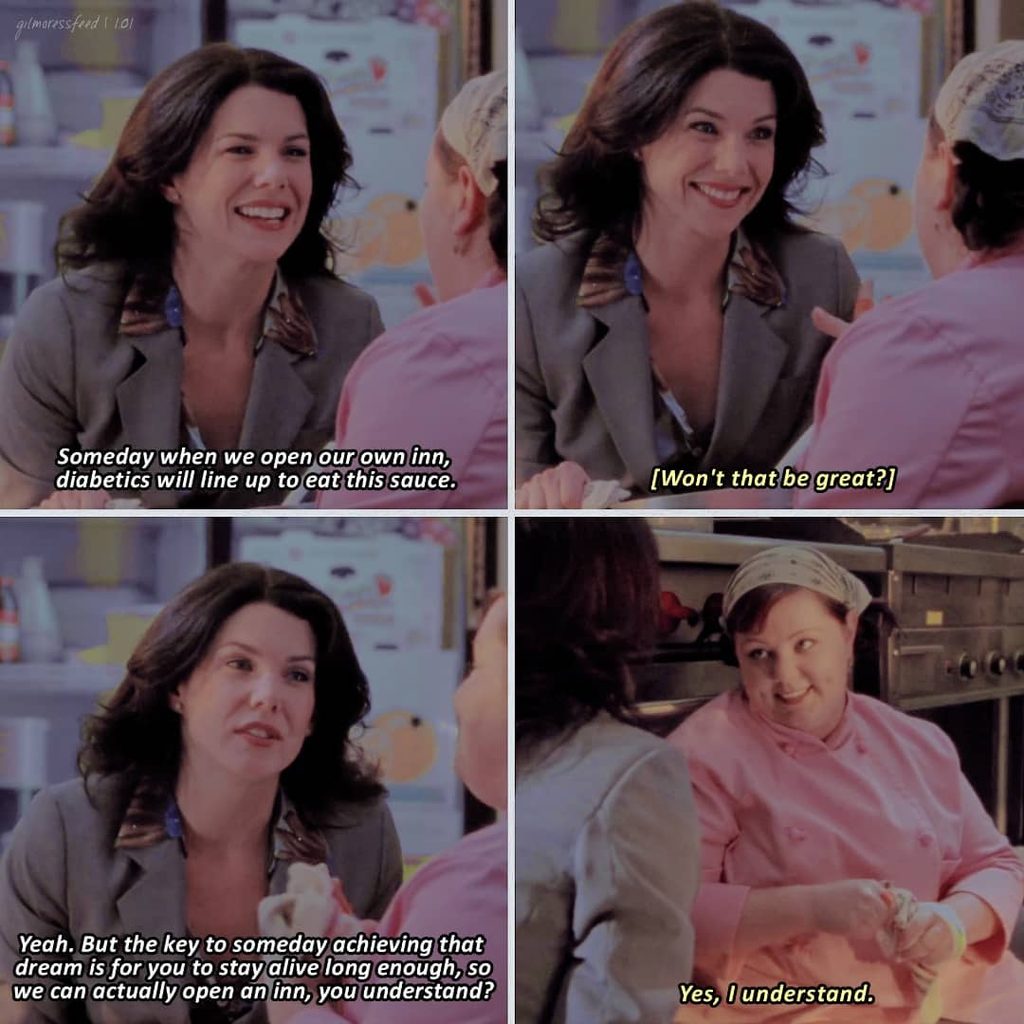
One of the clearest ways to understand Lorelai as a mother is to look at what she dreams about.
Her ambitions are never only personal. When she dreams of opening an inn, building a business, or creating stability, she is not dreaming in a vacuum. Rory is embedded in those hopes. Lorelai’s version of motherhood is not passive caretaking. It is active world-building.
She is trying to create a life that feels freer, warmer, and more self-directed than the one she inherited.
And the older Rory gets, the more she has to confront what that means. Her childhood did not simply happen. It was made. Made through sacrifice, humor, improvisation, and stubbornness. Made through Lorelai’s determination to convert uncertainty into home.
That realization does not make their relationship easier. If anything, it makes it more emotionally demanding. Because once you see your mother as a person, gratitude and frustration begin to coexist in more complicated ways.
The beauty of their relationship is that it changes without losing its heart
The strongest mother-daughter relationships are not the ones that remain frozen in one dynamic forever. They are the ones that evolve without losing their emotional core.
That is exactly what happens with Lorelai and Rory.
They begin as a pair who feel almost inseparable. But adulthood, independence, romance, education, and conflict all test that closeness. Rory has to become someone separate from the person Lorelai imagined protecting forever. Lorelai has to accept that closeness is not the same thing as control.
That process is not always graceful. Sometimes it is painful. Sometimes it reveals how much they rely on humor to dodge harder truths.
But it is also what makes the relationship feel real.
Because Gilmore Girls was never simply selling an idealized fantasy of motherhood. It was showing how love survives change, disappointment, difference, and growth.
And in the end, that may be why viewers keep returning to Lorelai and Rory. Not because they were a perfect mother and daughter. But because they kept trying to know each other more honestly as time went on.
That is a rarer kind of love story than television usually gives us.
Do you think Rory understood Lorelai better as she got older—or did growing up make their relationship more complicated?