- Why the Quiet Gilmore Girls Scenes Become More Emotional When You’re Older
- The Older You Get, the Less Gilmore Girls Is About Big Moments
When you are younger, television teaches you to wait for the major scene.
The confession.
The breakup.
The graduation.
The wedding.
The dramatic entrance.
Those are the moments that seem important.
Then you grow older.
And life starts teaching you something very different.
Some of the moments that change you forever happen while holding coffee.
While packing books.
While sitting in an apartment.
While standing in a diner.
While someone takes a photograph you do not particularly want.
That is one reason Gilmore Girls becomes richer with age.
The show understands that major transitions rarely announce themselves properly.
Moving forward often looks completely ordinary

Boxes.
Books.
An annoyed expression.
Someone taking pictures.
Visually, nothing about this scene needs to scream “life transition.”
And yet moving is one of the most emotionally loaded acts people experience.
A room becomes temporary.
Objects get packed.
A version of daily life disappears.
When you are young, moving can look exciting.
When you are older, you begin to understand how strange it feels to dismantle a space that held your routines.
The physical act is ordinary.
The emotional act is enormous.
Friendship often marks transitions more than we realize
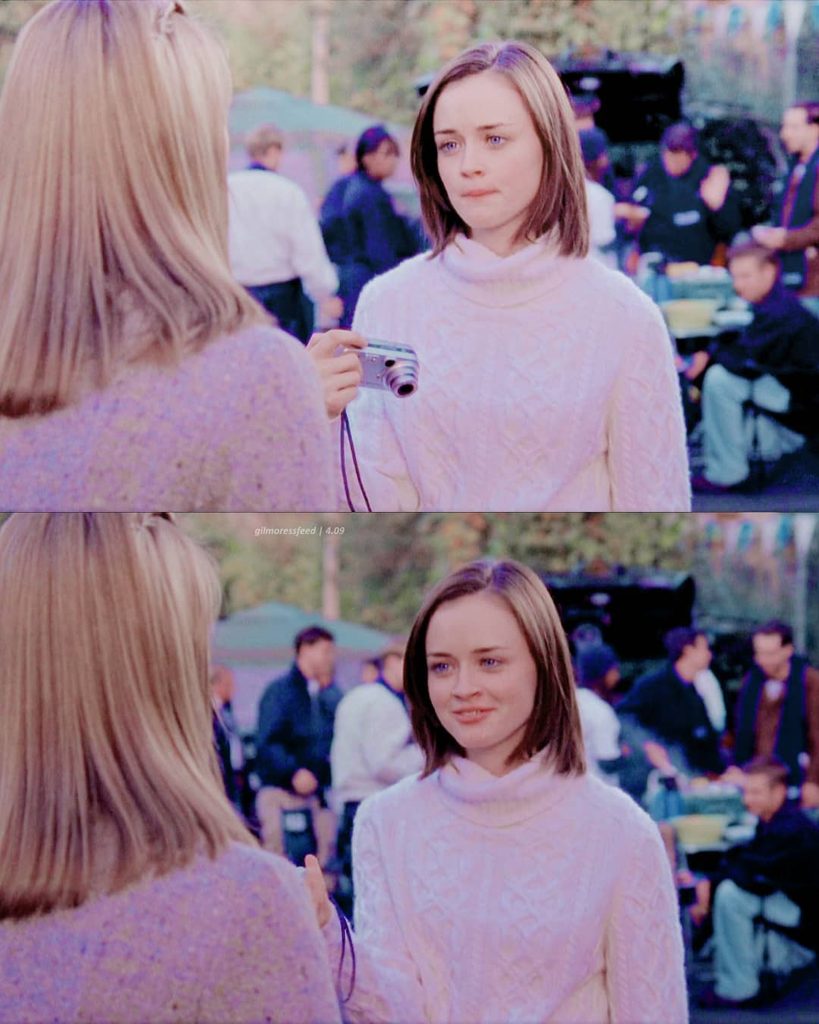
A friend taking your picture while you pack can feel silly in the moment.
Years later, that photograph may become the record of a version of yourself that no longer exists.
That is the kind of emotional detail Gilmore Girls repeatedly captures.
People joke through changes.
They tease.
They complain.
Then time moves anyway.
Major relationship moments can happen in places that feel almost too normal

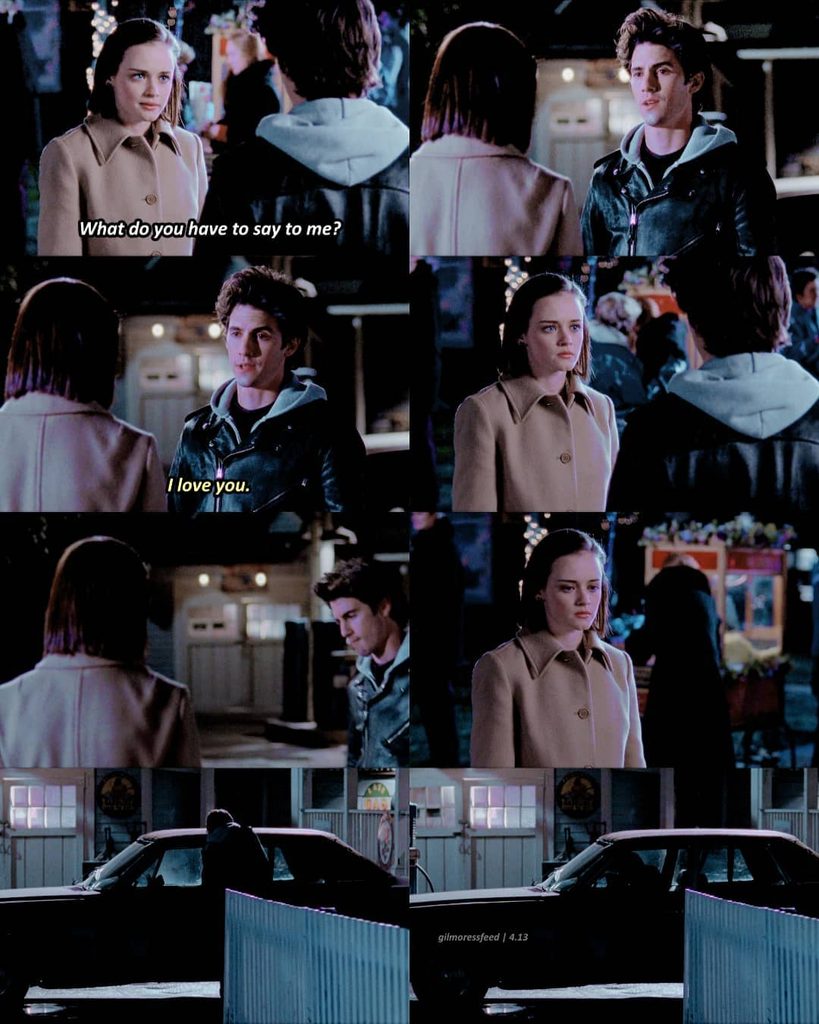
Jess saying “I love you” does not occur inside some grand romantic fantasy.
The scene feels messy.
Uneven.
Human.
That is why it works.
Life does not always arrange the lighting correctly before someone says the sentence you have been waiting to hear.
Sometimes you are angry.
Sometimes you are tired.
Sometimes the timing is terrible.
Adulthood makes that feel more believable, not less romantic.
Comfort itself becomes more meaningful with age

Coffee sounds trivial when you are young.
As an adult, routines become emotional infrastructure.
The drink you order.
The place you sit.
The person who already knows what you want.
Lorelai’s insistence that this is a “coffee morning” is funny because every morning is basically a coffee morning for her.
But underneath the joke is routine.
And routines become increasingly valuable as life becomes less predictable.
Being “comfortable here” stops sounding like a throwaway line
This is another detail that reads differently with age.
Comfort is not glamorous.
Television often sells excitement.
Real adulthood increasingly teaches the value of places where you can simply exist without performing.
That is part of why Luke’s becomes emotionally important to so many characters.
It is familiar.
Familiarity is underrated when you are young.
It becomes precious when life gets complicated.
Even embarrassment changes when you rewatch the show
Morning hair.
Face treatments.
Pajamas.
Complaining that nothing is fair.
These scenes feel small.
But they are part of what makes the characters feel lived-in.
Young viewers often focus on plot.
Older viewers become attached to texture.
How people look when they are not prepared.
How friendships survive unglamorous moments.
How ordinary the days between major events really are.
Nostalgia is not really about wanting to be young again
This is where Gilmore Girls becomes especially powerful.
People say they want Stars Hollow.
Maybe what they actually want is the feeling of ordinary life still being full of possibility.
A diner conversation might become important.
A bus ride might matter.
A goodbye might not feel final yet.
A stack of books might still point toward an unknown future.
That is nostalgia.
Not necessarily wanting the past back.
Wanting to remember what uncertainty felt like before it became exhausting.
The show changes because we change
When you first watch Gilmore Girls, you may identify with Rory dreaming about the future.
Later, you may understand Lorelai trying to hold together the present.
Later still, Emily’s anxiety about change may suddenly make more sense.
The episodes remain the same.
The emotional center moves.
That is why the show continues to work after repeated rewatches.
You keep arriving as a different person.
And different scenes become important.
That may be the greatest comfort of all.
The show waits.
Then life teaches you how to see another layer.
Which ordinary Gilmore Girls scene became much more emotional for you as you got older?