- The Older You Get, the More Paris Geller Stops Being the Joke
- Why Paris Looks Completely Different When You Rewatch Gilmore Girls Years Later
The first time many viewers meet Paris Geller, she is exhausting.
Competitive.
Aggressive.
Judgmental.
Intense.
She treats school like combat and friendship like something that needs to survive a background check.
She can be cruel.
She can be hilarious.
And for a while, she seems designed mainly to make Rory’s life more difficult.
Then you rewatch Gilmore Girls as an adult.
And Paris begins to look different.
Not easier.
Not always nicer.
But much more understandable.
Because underneath all that aggression is a person who seems to believe one terrifying thing:
If I am not exceptional, I may not be worth keeping around.
Paris learns early to treat achievement as safety

Graduation is supposed to represent success.
For Paris, achievement has always carried more emotional weight than that.
Grades.
Admissions.
Leadership.
Career.
Planning.
She does not simply want to succeed.
She needs success to provide structure.
That distinction becomes clearer with age.
Young viewers may look at Paris and think:
Why can’t she relax?
Adults may recognize another question:
What happens to someone who only feels safe when she is performing well?
Rory becomes important because she survives Paris
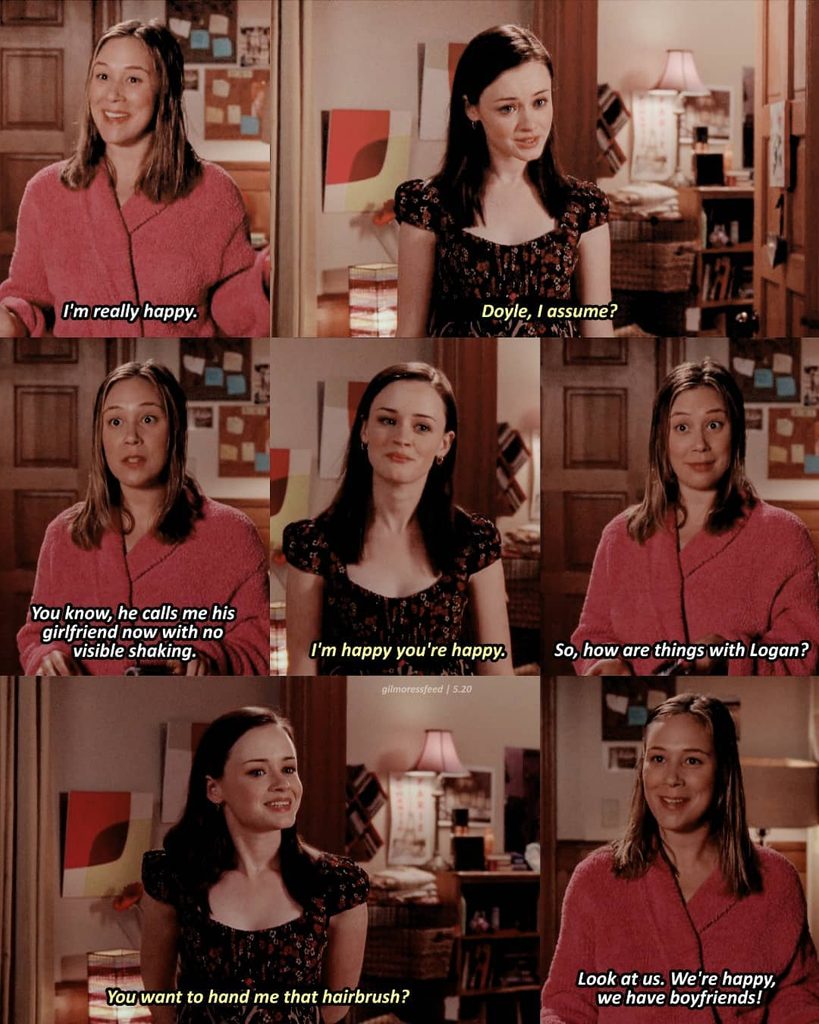
Paris and Rory’s friendship is unusual because it is not built primarily on comfort.
Paris overwhelms Rory.
Rory frustrates Paris.
They compete.
Judge.
Interrupt.
Advise.
Occasionally infuriate each other.
And somehow the relationship persists.
That persistence matters enormously for someone like Paris.
A person who expects everything to be earned may have difficulty believing affection can survive imperfection.
Rory does something important by simply remaining.
Even happiness makes Paris suspicious

One of the funniest things about Paris is the way she can describe happiness like a medical condition.
A boyfriend.
A good moment.
A relationship that appears stable.
Even pleasure feels like something that should be analyzed for possible complications.
That is comedy.
It is also sad.
Paris is better at preparing for disaster than trusting happiness.
A lot of adults recognize that pattern.
Sometimes the people who seem strongest are simply the people who became excellent at anticipating everything that could go wrong.
Her relationships expose the vulnerability underneath the confidence
Paris often speaks as though she knows exactly what she is doing.
Her emotional life repeatedly proves otherwise.
That contrast is important.
Competence in one area does not create competence everywhere.
You can be brilliant and still insecure.
Organized and still terrified.
Ambitious and still desperately afraid of rejection.
Paris embodies that contradiction.
That is why she becomes richer with age.
Rory and Paris grow because they stop needing to defeat each other
One of the most satisfying developments in their relationship is that competition eventually becomes less central.
They do not suddenly become sentimental best friends.
That would not feel true to either character.
Instead, they develop something more believable:
Recognition.
I know what you are like.
You know what I am like.
Neither of us is easy.
We are still here.
That is a deeply adult form of friendship.
The saddest thing about Paris is how often she mistakes preparation for protection
Paris plans because plans reduce uncertainty.
But life keeps producing events that planning cannot neutralize.
Love.
Rejection.
Friendship.
Family.
Career disappointment.
None of these things obey a perfect checklist.
Every time reality escapes Paris’s control, the show reveals the frightened person beneath the competence.
That is not weakness.
It is character.
The older you get, the less Paris feels exaggerated
That may be the strangest part of rewatching her.
At sixteen, Paris can look unrealistically intense.
At thirty-five, she may remind you of people you know.
Maybe even yourself.
People who schedule everything because uncertainty makes them anxious.
People who work harder after rejection.
People who talk faster when scared.
People who achieve constantly because slowing down might allow insecurity to catch up.
The joke remains funny.
The emotional subtext gets heavier.
Paris may be one of the series’ most honest adult characters
Because she never becomes perfectly healed.
She grows.
She forms relationships.
She succeeds.
She matures.
But she remains recognizably Paris.
That is important.
Television often treats growth as becoming calmer, softer and more socially acceptable.
Gilmore Girls does not completely do that to Paris.
She keeps her edges.
Growth does not erase personality.
It gives that personality more context.
And maybe that is why Paris becomes better with every rewatch.
At first, she is Rory’s rival.
Eventually, she becomes one of the clearest portraits in the series of what ambition looks like when it grows out of fear.
Funny.
Impressive.
Exhausting.
And surprisingly vulnerable.
Did Paris become more sympathetic to you as you got older—or do you still find her impossible?