- The Hardest Part of Lorelai and Rory’s Relationship Was the Thing Fans Loved Most
- Why Being Best Friends Made Lorelai and Rory’s Fights Hurt More
The defining image of Lorelai and Rory is not a mother giving instructions to her daughter.
It is two women talking.
At a table.
On a couch.
On the phone.
Walking through town.
Talking about school, boys, food, grandparents, clothes and everything in between.
That closeness is the emotional foundation of Gilmore Girls.
It is also one of the relationship’s biggest complications.
Because Lorelai does not only want Rory to trust her.
She wants Rory to like her.
And those two goals are not always compatible with being a parent.
Their relationship works because Rory can talk to Lorelai
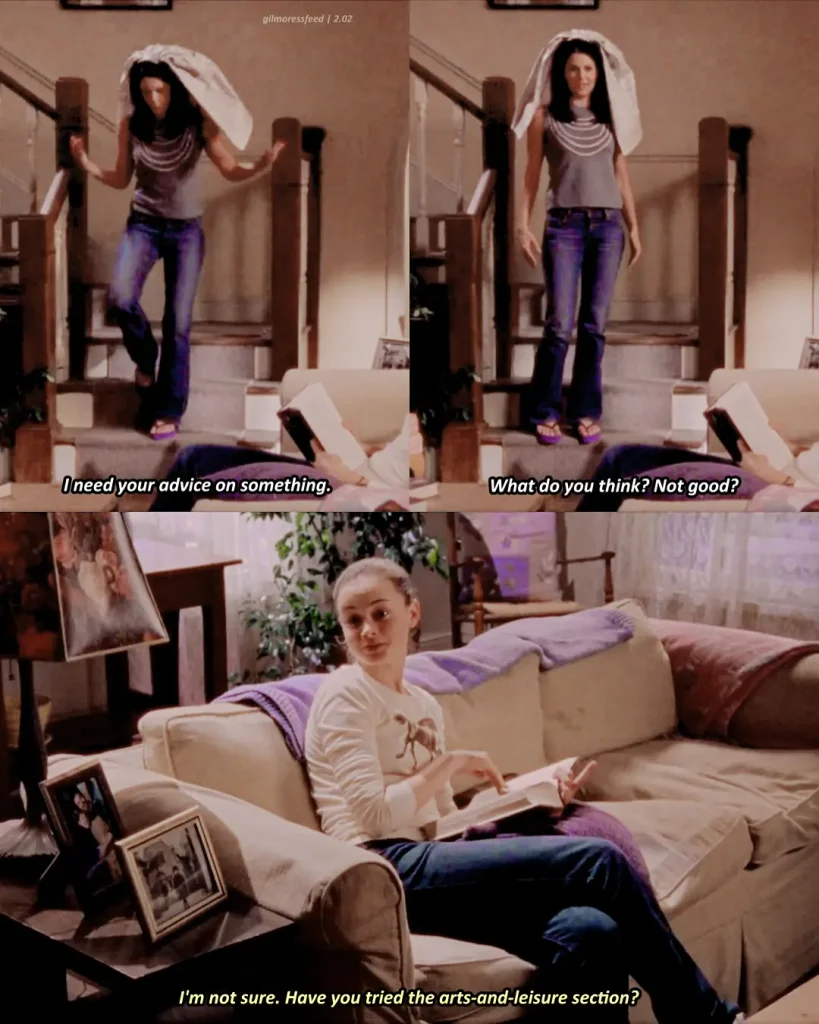
The advice scene captures something special about their dynamic.
Lorelai does not present herself as the all-knowing adult.
She asks Rory what she thinks.
She invites Rory into decisions.
Sometimes she even behaves like the younger person in the conversation, while Rory supplies the deadpan response.
That reversal is funny.
But it also creates genuine intimacy.
Rory learns that her opinion matters.
Lorelai learns that motherhood does not have to mean emotional distance.
This is the relationship Lorelai wishes she had experienced growing up.
Emily provides the model Lorelai spends her life resisting

Compare that openness with Lorelai’s conversations with Emily.
Even a telephone call can become a small battle over interpretation.
One person says something is a disaster.
The other assumes the disaster must somehow concern her.
Then comes the correction.
Then the defensiveness.
Then the joke.
That rhythm tells us almost everything about their relationship.
Lorelai has spent years expecting Emily to judge her.
Emily has spent years expecting Lorelai to make everything about their conflict.
Both women enter conversations carrying an emotional history the current topic cannot contain.
So even small conversations become loaded.
Lorelai’s response to this childhood is understandable:
She will do the opposite with Rory.
But “the opposite of Emily” is not a complete parenting philosophy
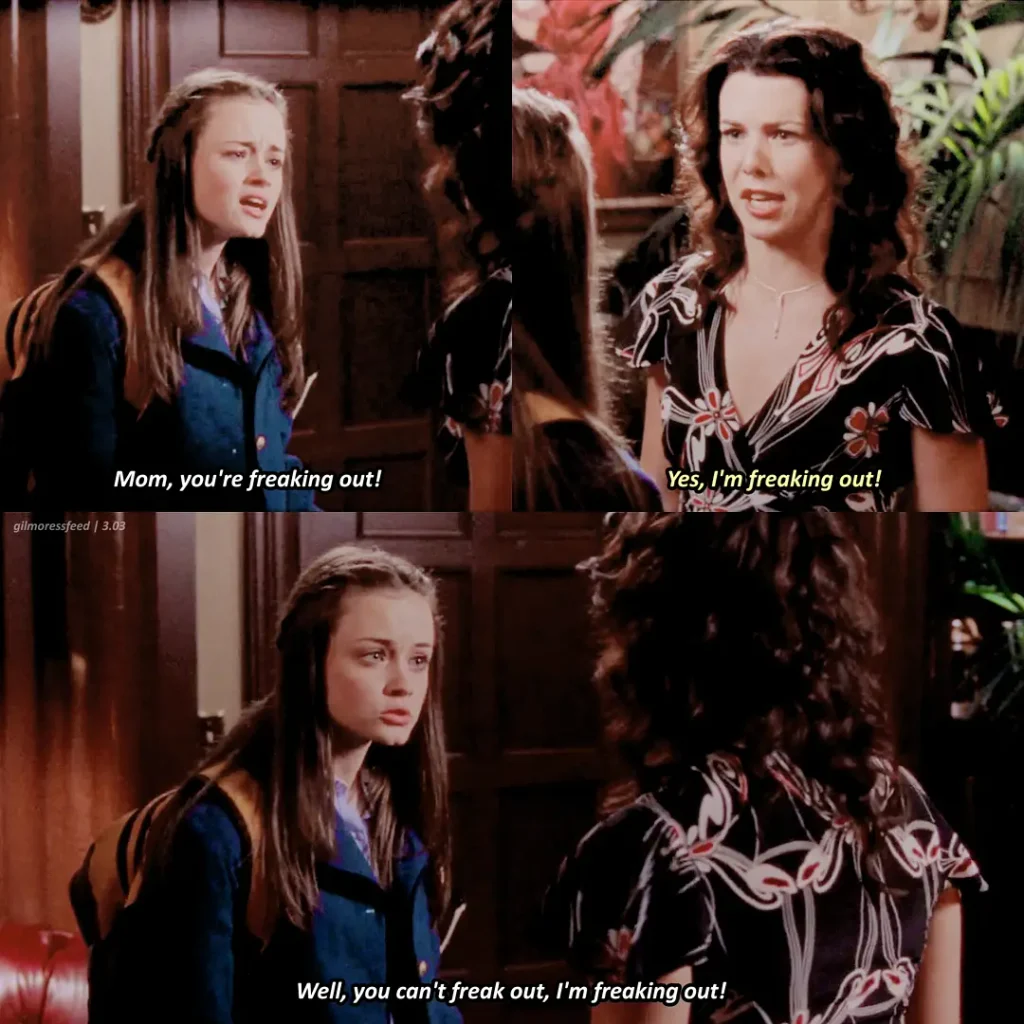
The moment when Lorelai and Rory are both freaking out is funny precisely because the hierarchy collapses.
Rory needs calm.
Lorelai also needs calm.
Neither has any available.
That feels true to their relationship.
They often regulate each other emotionally.
When one is stable, the other can fall apart.
But what happens when both need support at the same time?
That is where “best friends” becomes complicated.
A child—even an older child—sometimes needs a parent who can temporarily carry more of the emotional weight.
Lorelai cannot always do that.
Not because she does not love Rory enough.
Because she is still a person with her own panic, history and fears.
Lorelai gives Rory freedom, then discovers freedom includes disagreement
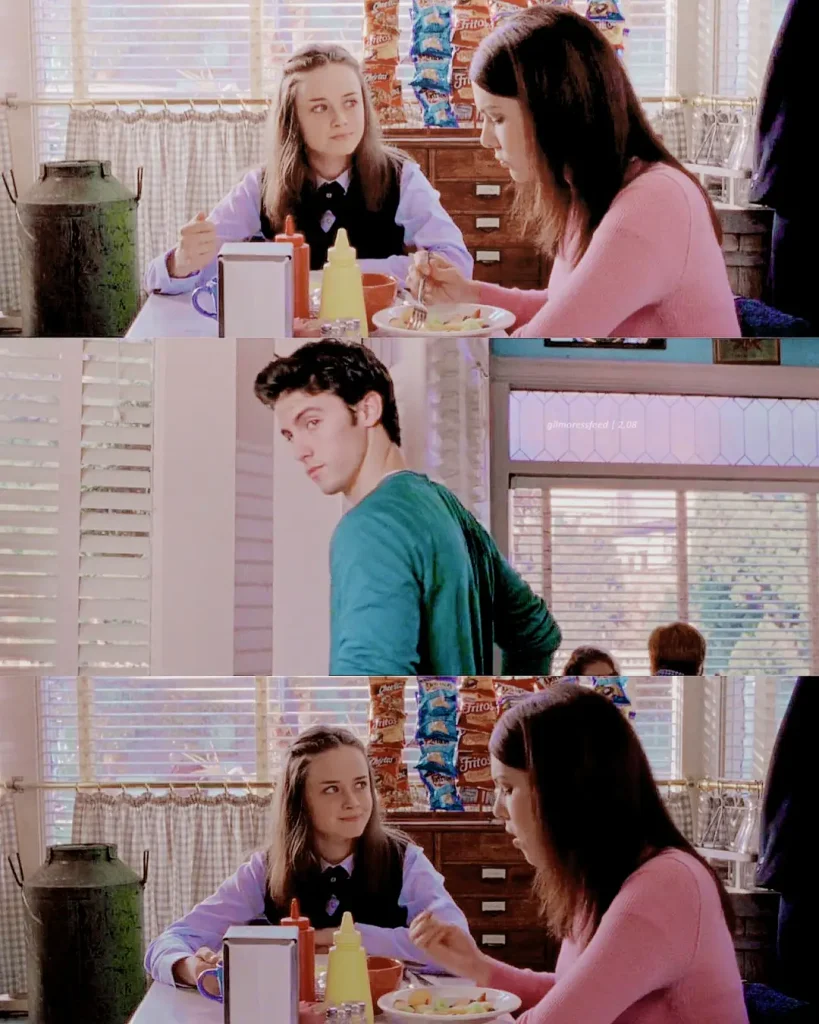
Early Rory asks for very little rebellion.
She is responsible.
She likes school.
She often seems more cautious than Lorelai herself.
That makes Lorelai’s parenting philosophy appear almost effortless.
Trust Rory.
Talk openly.
Make jokes.
Let her make choices.
But a parenting philosophy is easiest when your child keeps making choices you already approve of.
The real test comes later.
Rory develops her own romantic life.
Her own ambitions.
Her own interpretation of Emily and Richard.
Her own relationship with wealth and privilege.
Her own mistakes.
Suddenly independence becomes less theoretical.
Lorelai has to decide whether “I trust you to make your own decisions” still applies when Rory’s decision hurts, scares or disappoints her.
That is much harder.
Lorelai and Emily share one uncomfortable instinct

The security-code conversation is hilarious because Lorelai can turn even Emily’s intense seriousness into comedy.
But look underneath the humor.
Emily cares through management.
Write it down.
Protect it.
Remember it.
Do it correctly.
Lorelai finds that suffocating.
Yet she sometimes develops her own version of the same instinct with Rory.
Not through rules and etiquette.
Through emotional closeness.
Emily wants access to Lorelai’s decisions because she believes family gives her that right.
Lorelai sometimes assumes she should have access to Rory’s inner life because they have always told each other everything.
The methods are very different.
The pain of being excluded can be surprisingly similar.
Rory growing up forces Lorelai to redefine love
The hardest stage of parenthood is not necessarily childhood.
It may be the moment your child becomes an adult and your relationship no longer comes with an obvious role.
Do you advise?
Stay quiet?
Intervene?
Wait?
Say what you think?
Let them make the mistake?
That uncertainty is everywhere in Lorelai and Rory’s later relationship.
Lorelai cannot remain Rory’s mother in exactly the same way.
She also cannot simply become a peer.
The relationship has to evolve.
And evolution is messy.
Their fights matter because the closeness is real
This is why their disagreements can feel surprisingly painful for viewers.
We are not watching two people who never understood each other.
We are watching two people who usually do.
Distance is more painful when intimacy came first.
Silence means more when conversation was the default.
Disapproval hurts more when approval has always been emotionally important.
That is what makes Lorelai and Rory one of television’s most memorable mother-daughter relationships.
They are not perfect because they are best friends.
Sometimes being best friends makes everything harder.
They are compelling because the relationship keeps changing.
Friend.
Mother.
Daughter.
Confidante.
Adult.
Child.
Sometimes all of those roles exist in the same conversation.
And neither woman always knows which one she is supposed to be.
Did Lorelai and Rory’s friendship make Lorelai a better mother—or did it sometimes make parenting harder?